Groma Kolibri N — Two-Tone Sky Blue & Cream, circa 1960
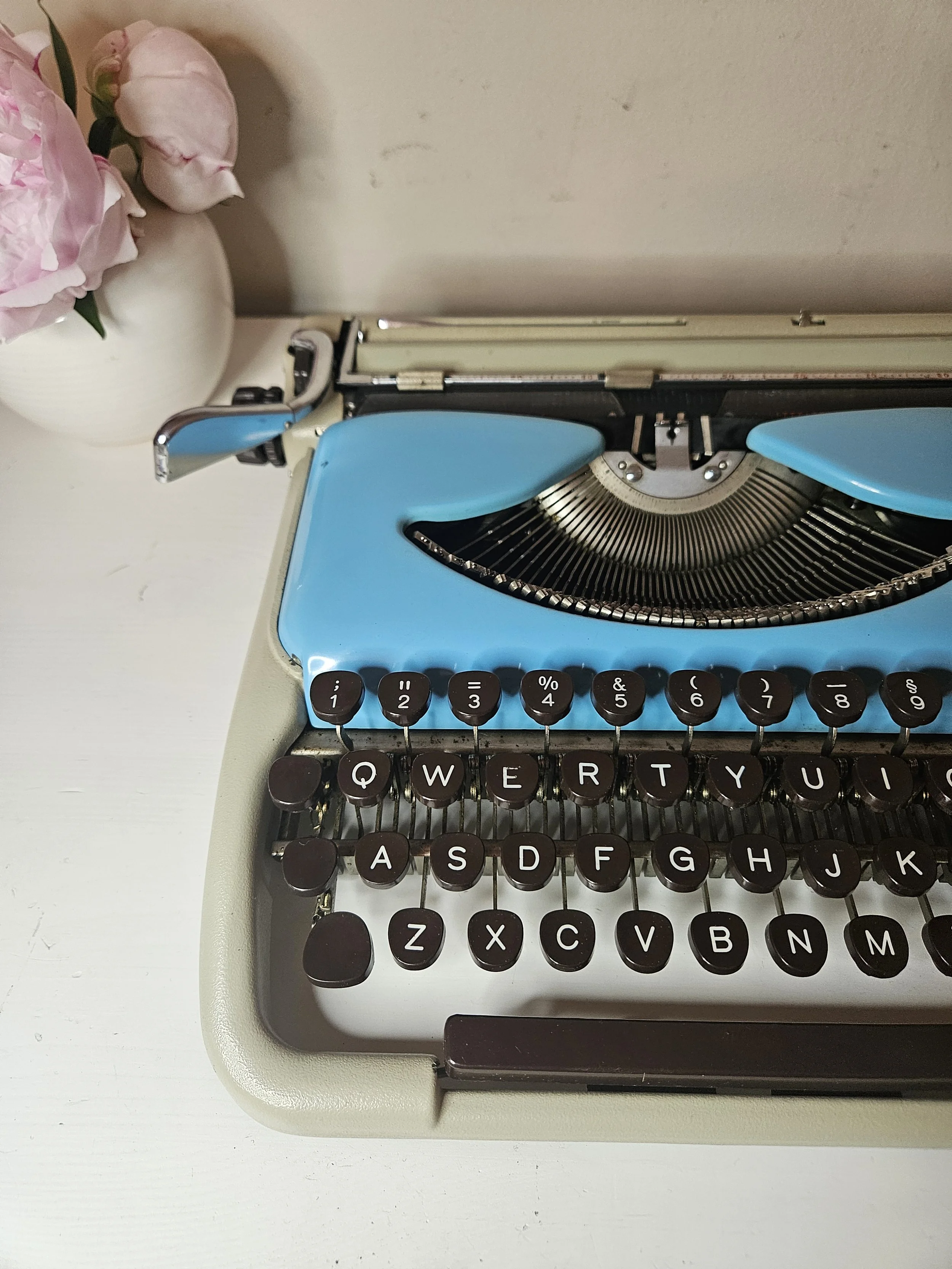
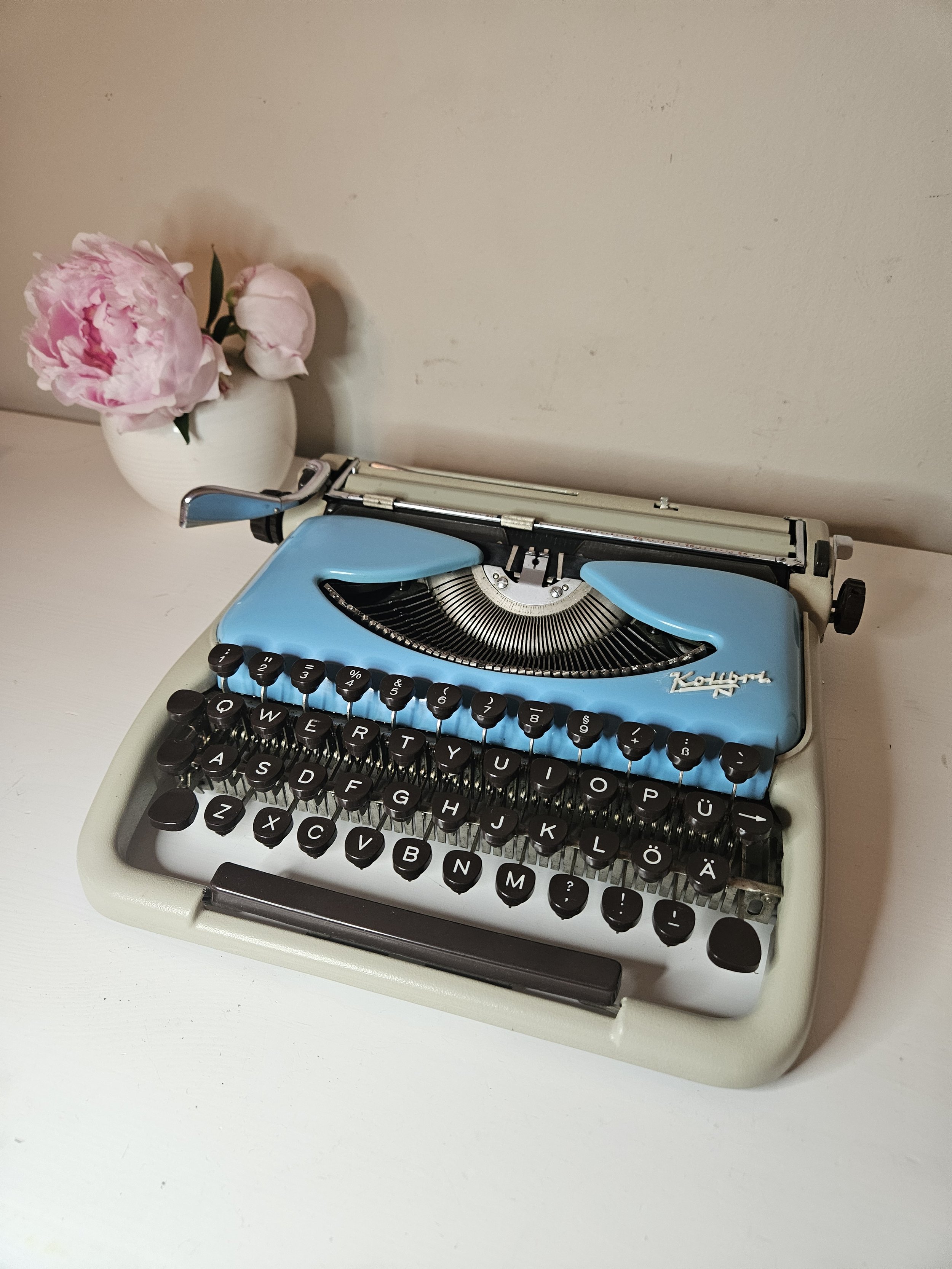
Groma Kolibri N — Two-Tone Sky Blue & Cream, circa 1960
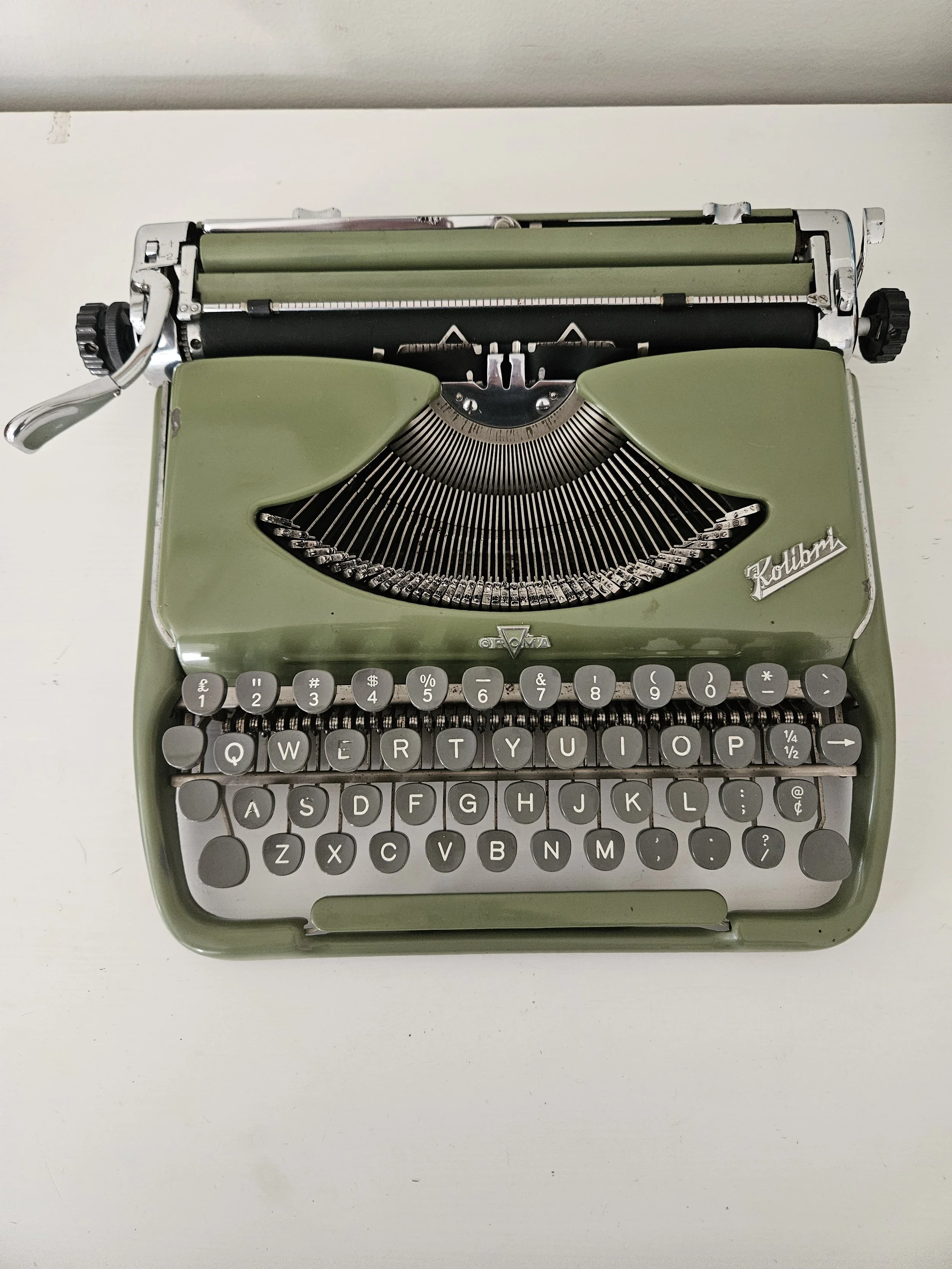
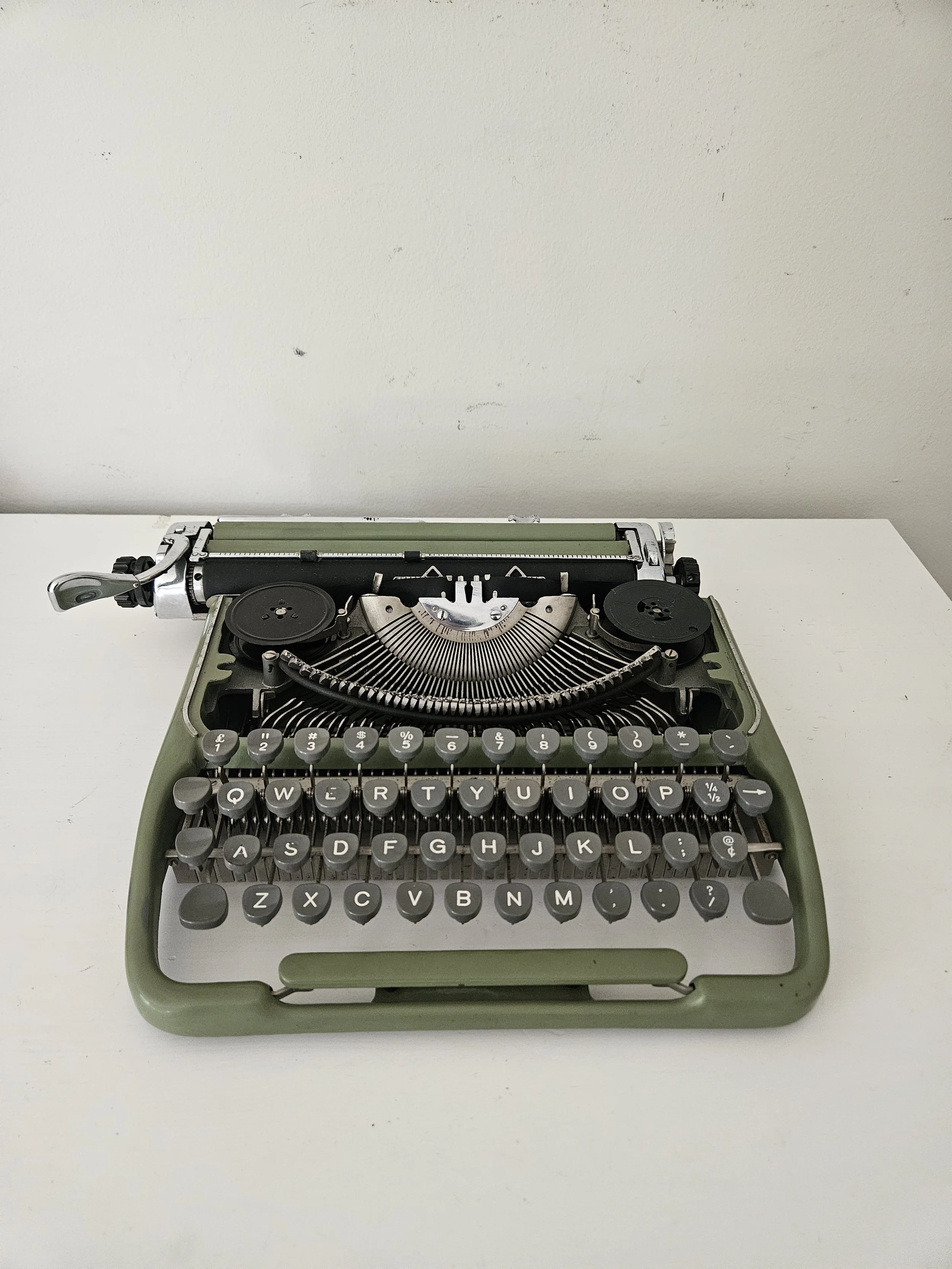
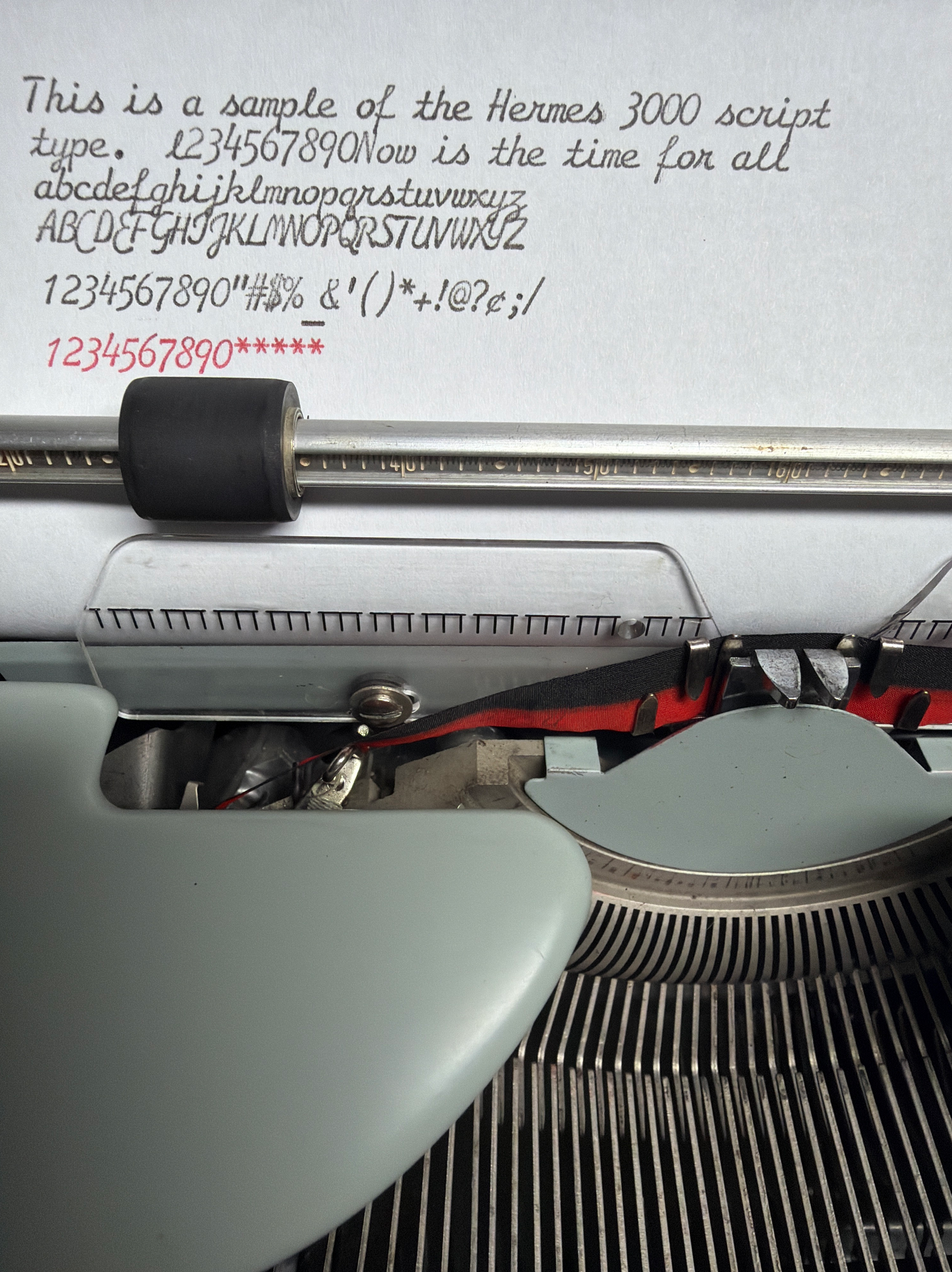
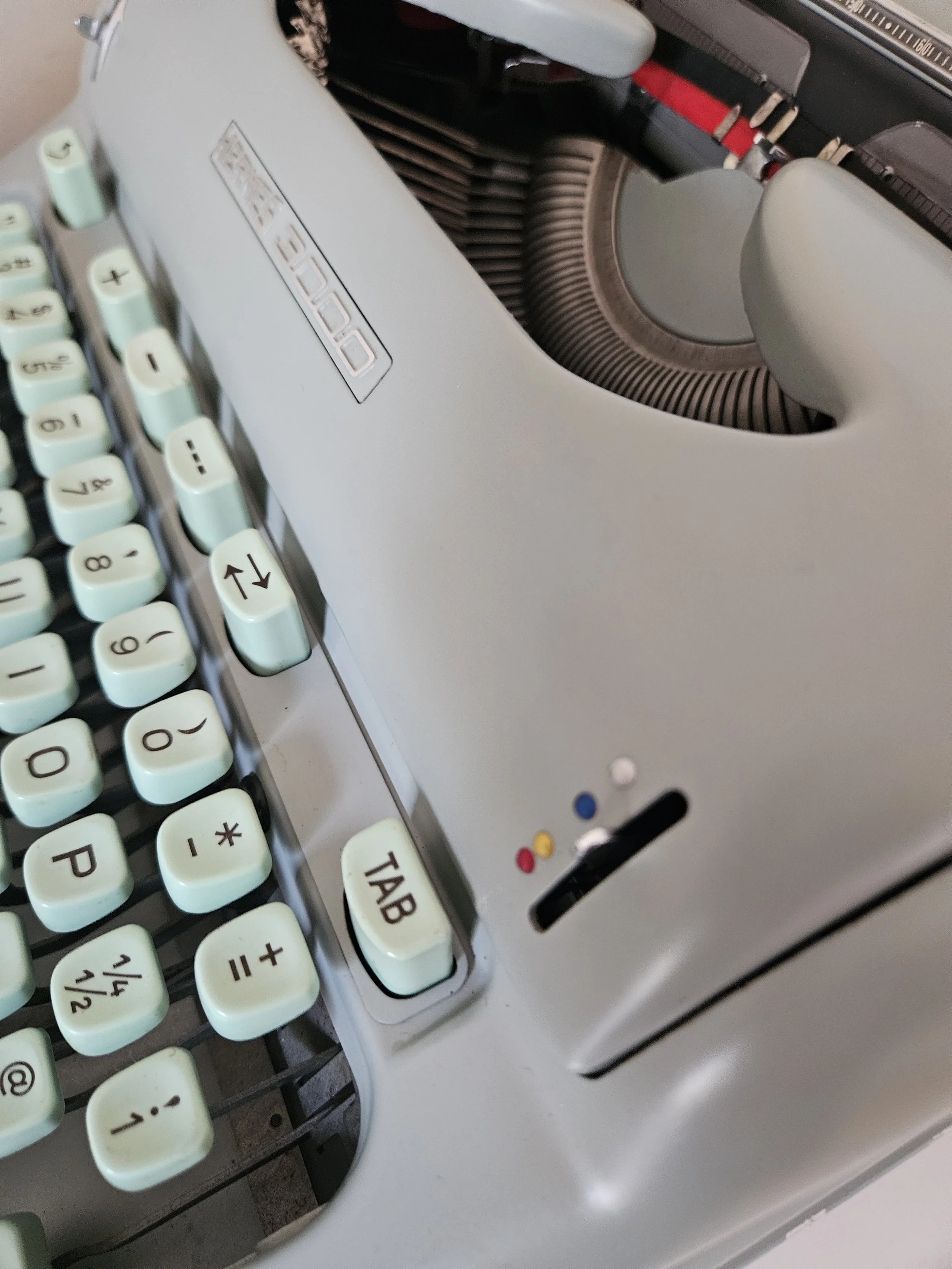
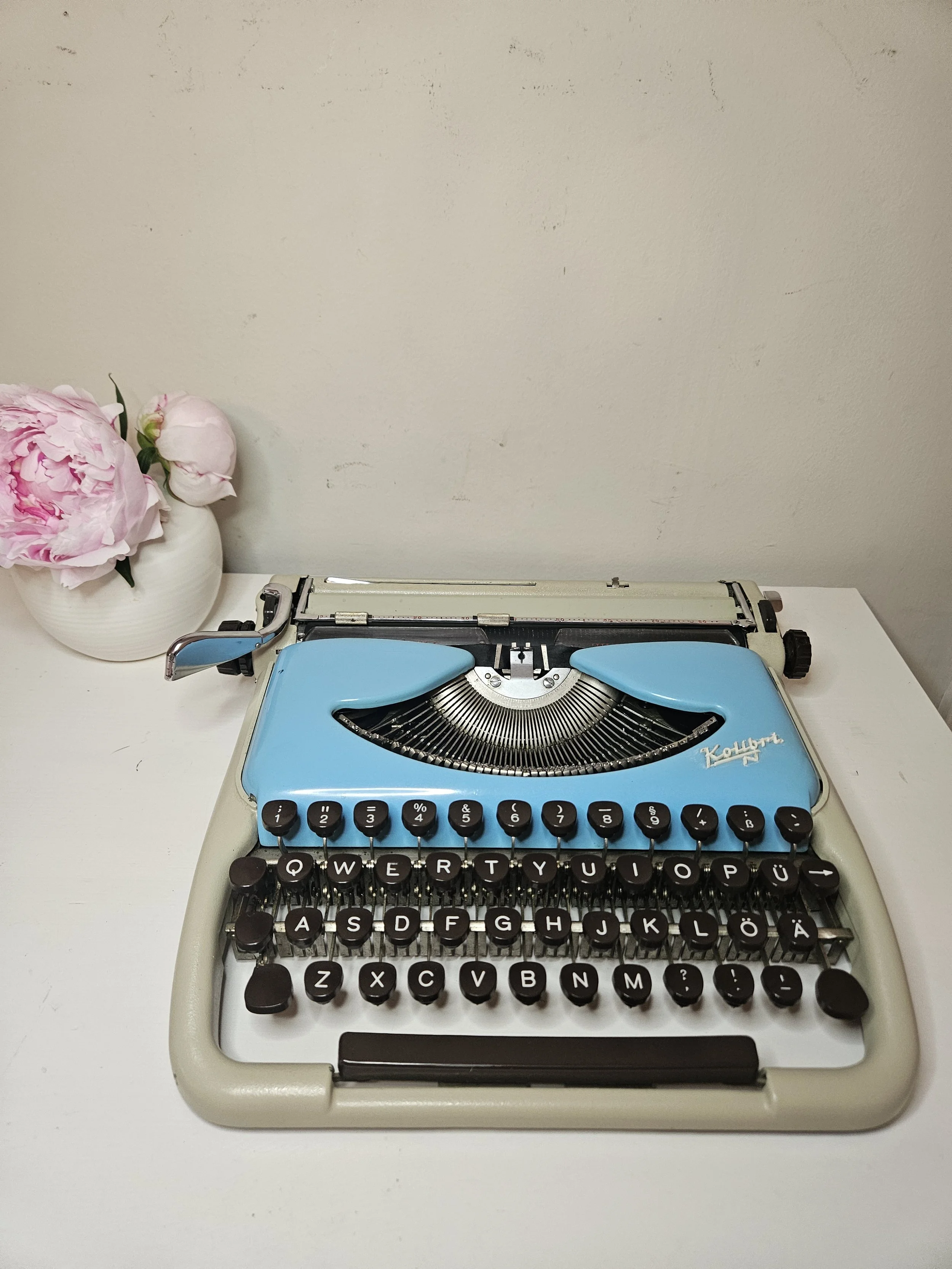
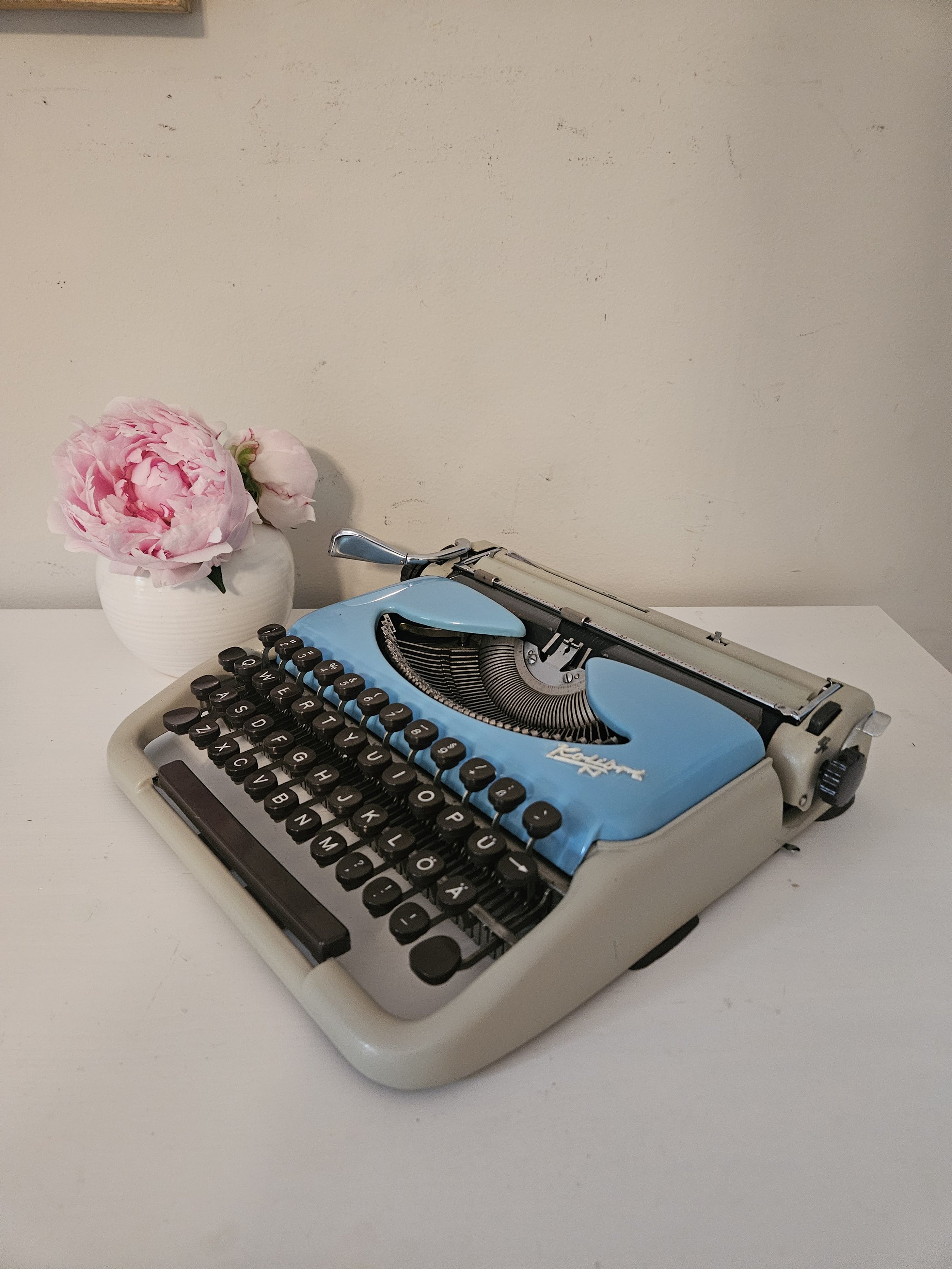
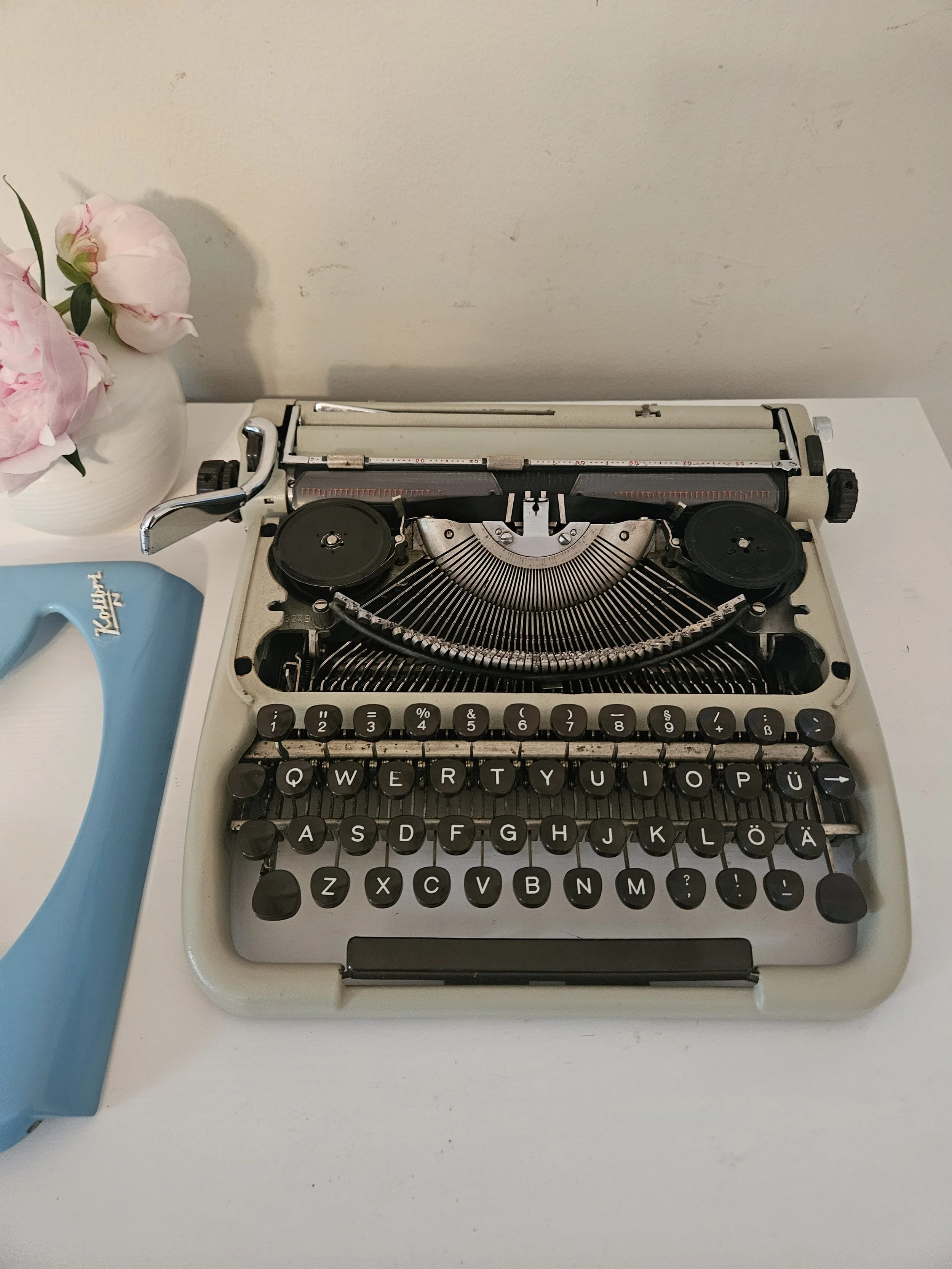
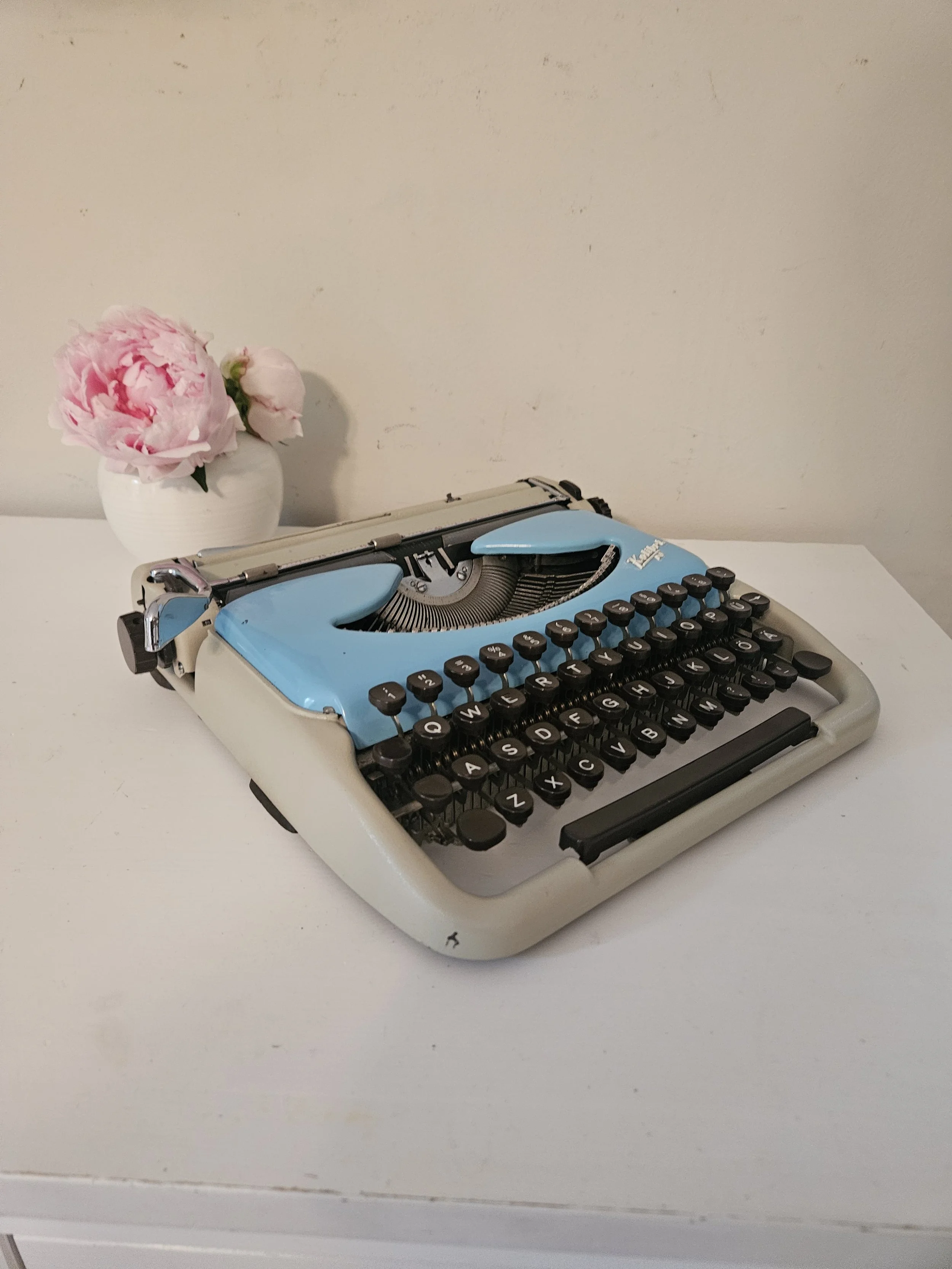
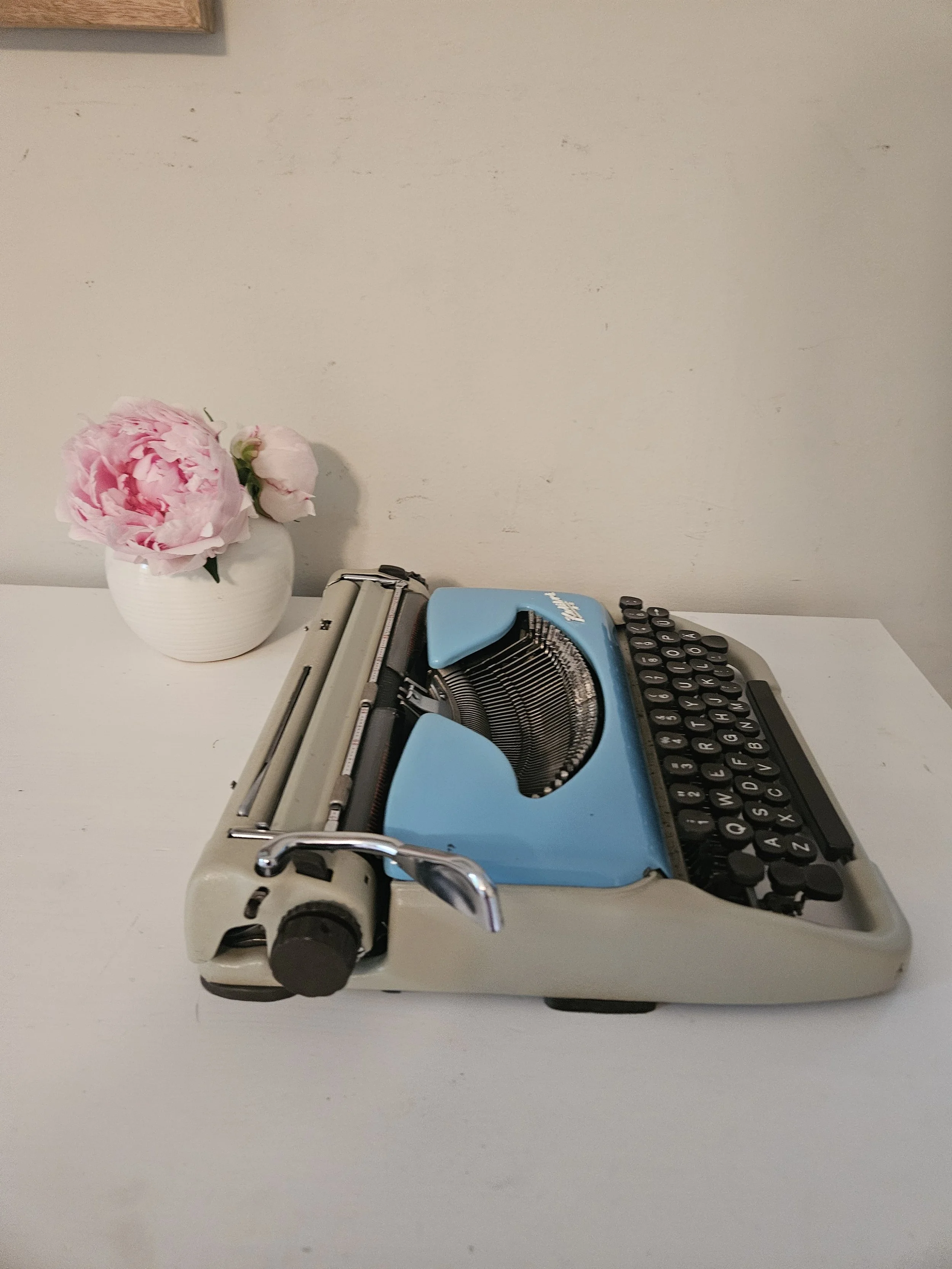
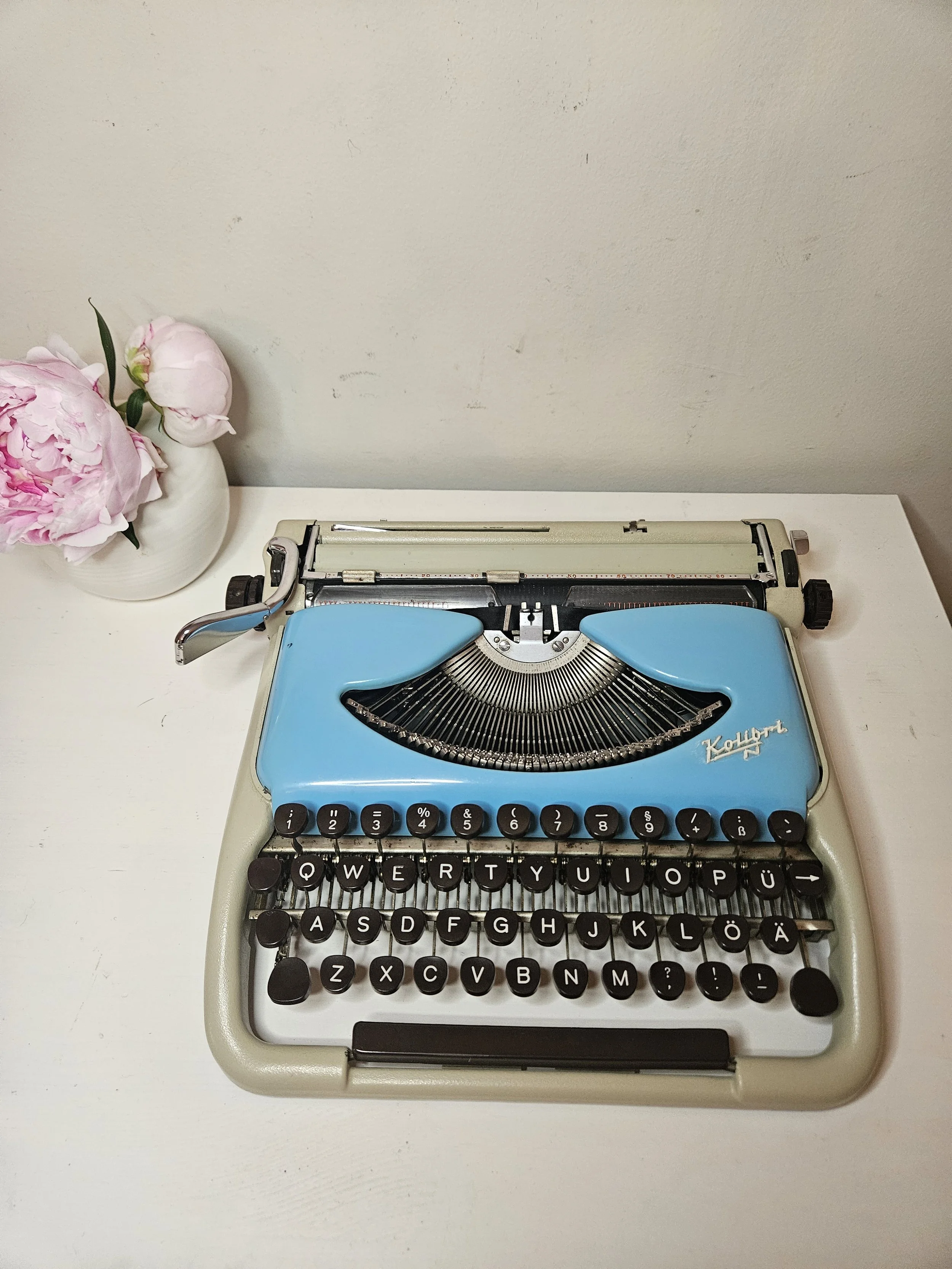
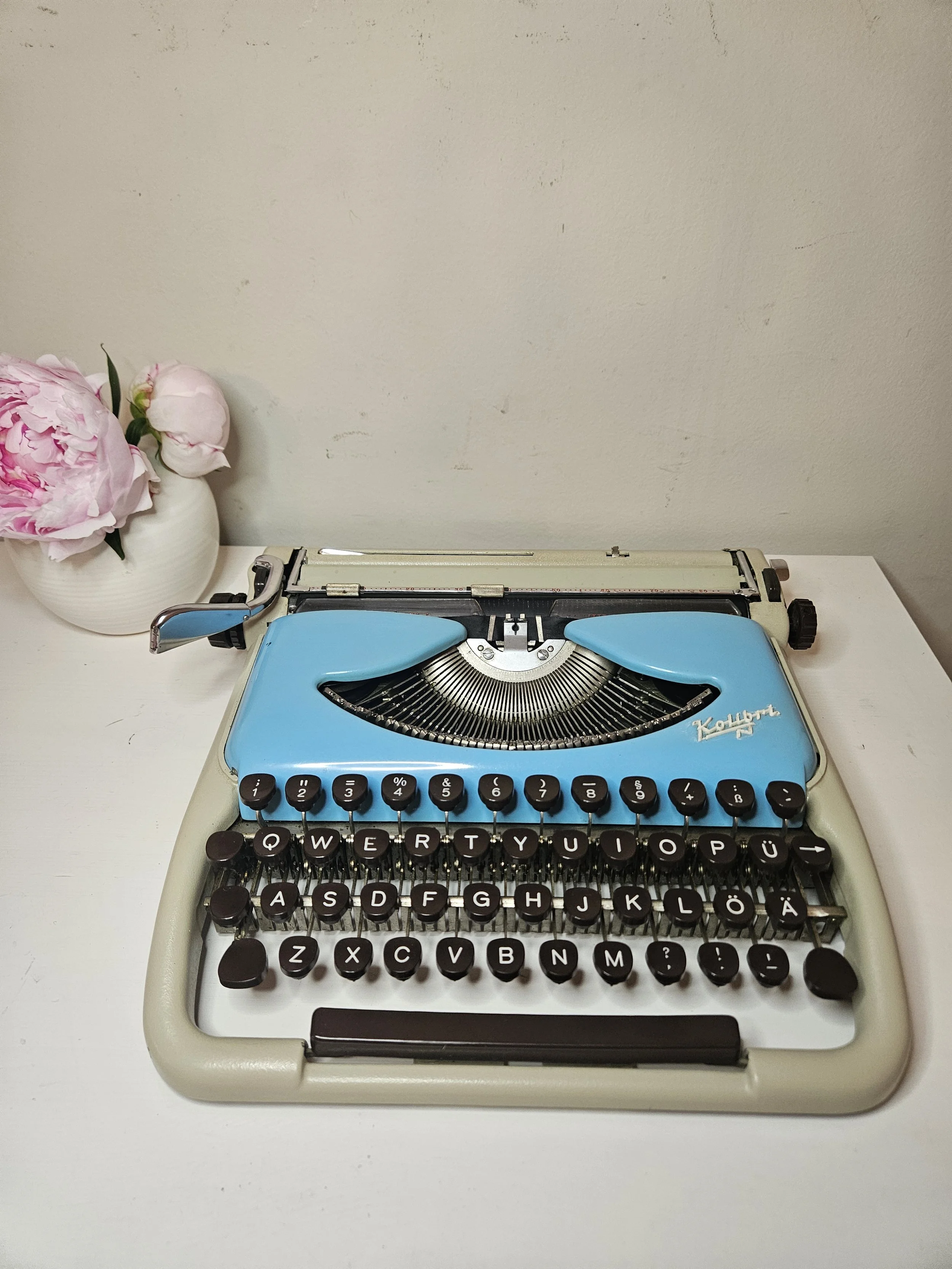
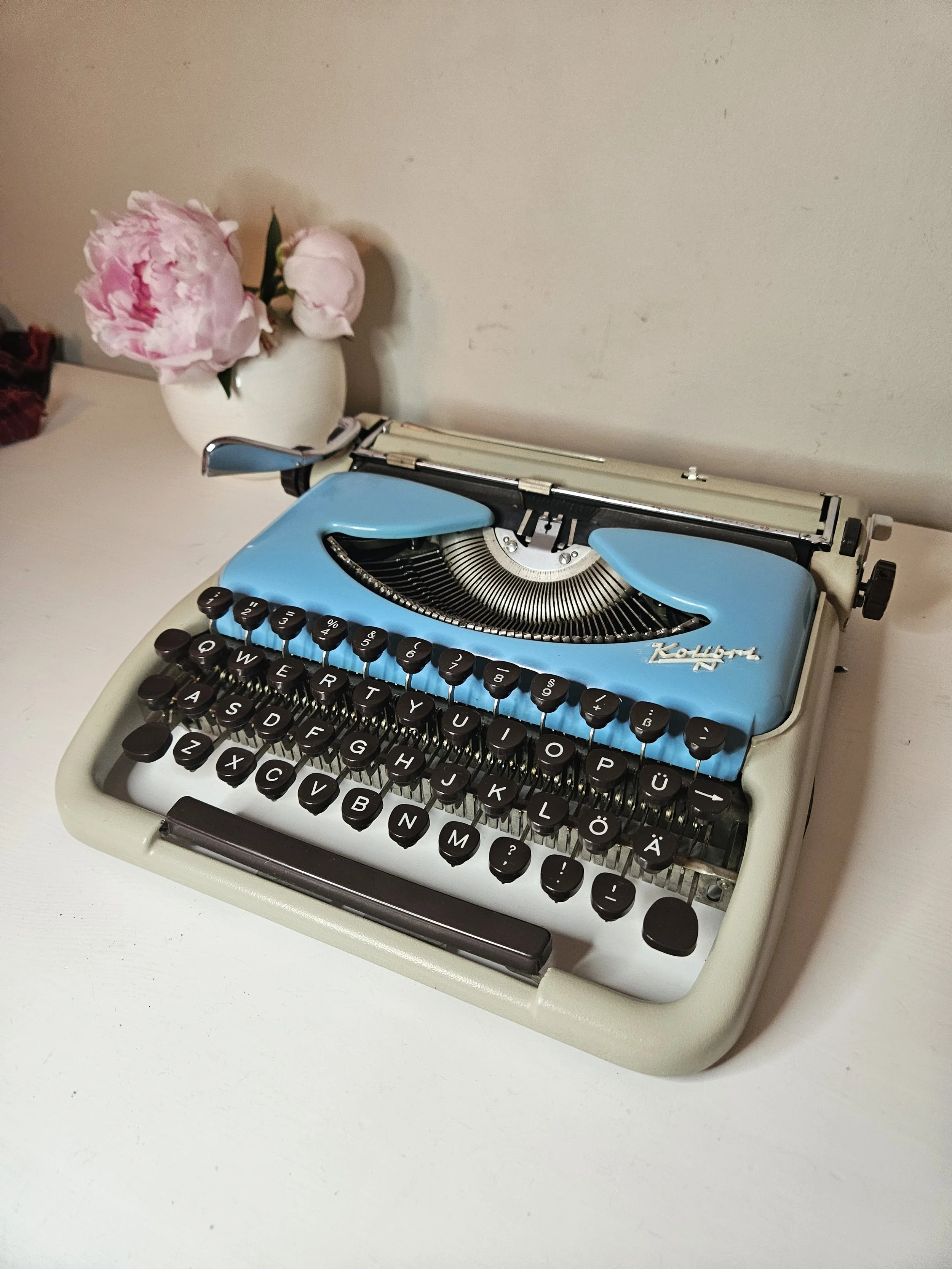
***You’ll get the exact machine shown in the photo.***
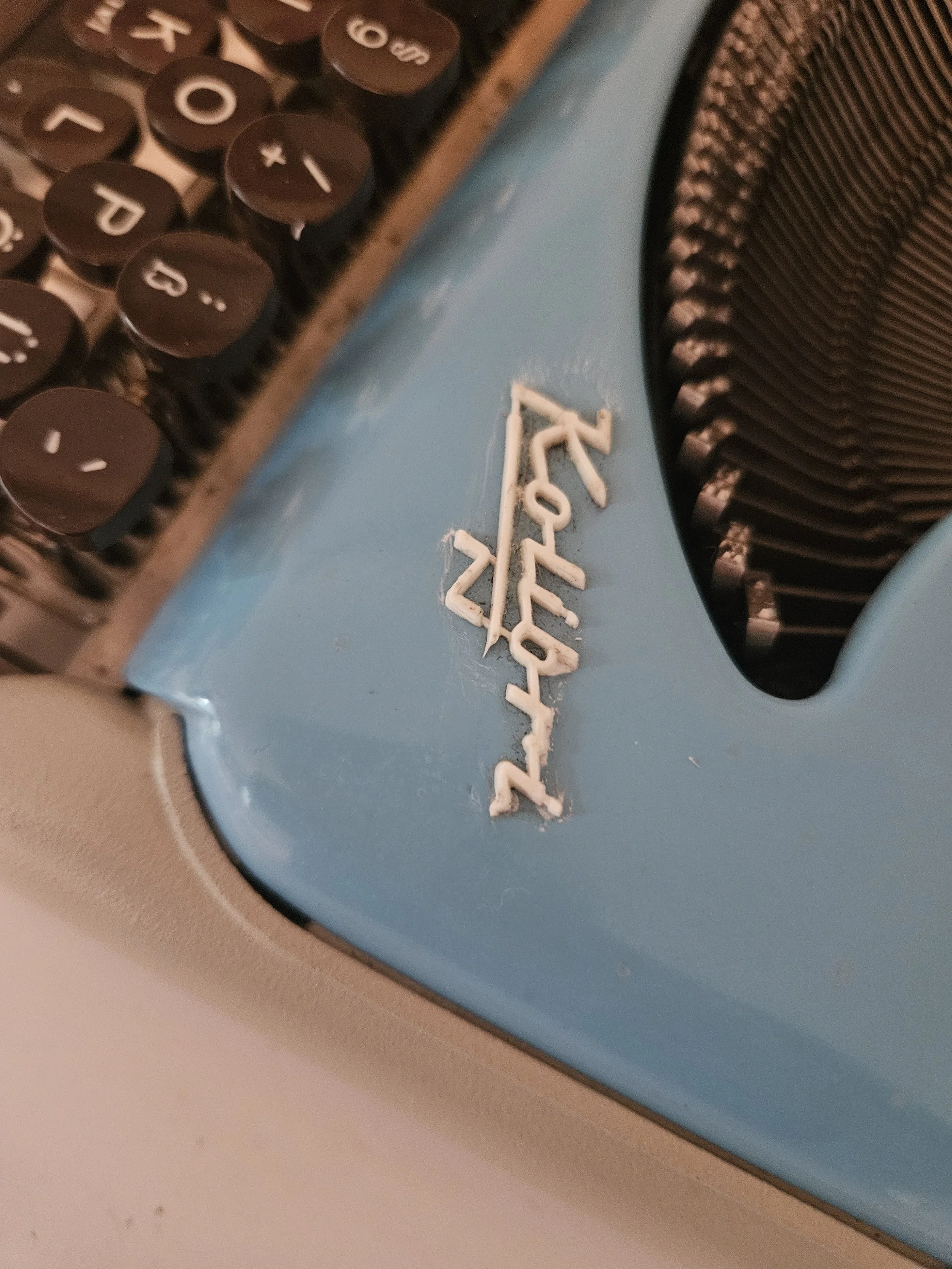
Few typewriters carry the mystique of the Groma Kolibri. By the time the Kolibri rolled off the line in the mid-1950s, Groma was operating behind the Iron Curtain as a state-owned Volkseigener Betrieb, and the little hummingbird it produced would become one of the most coveted ultra-portable typewriters ever made.
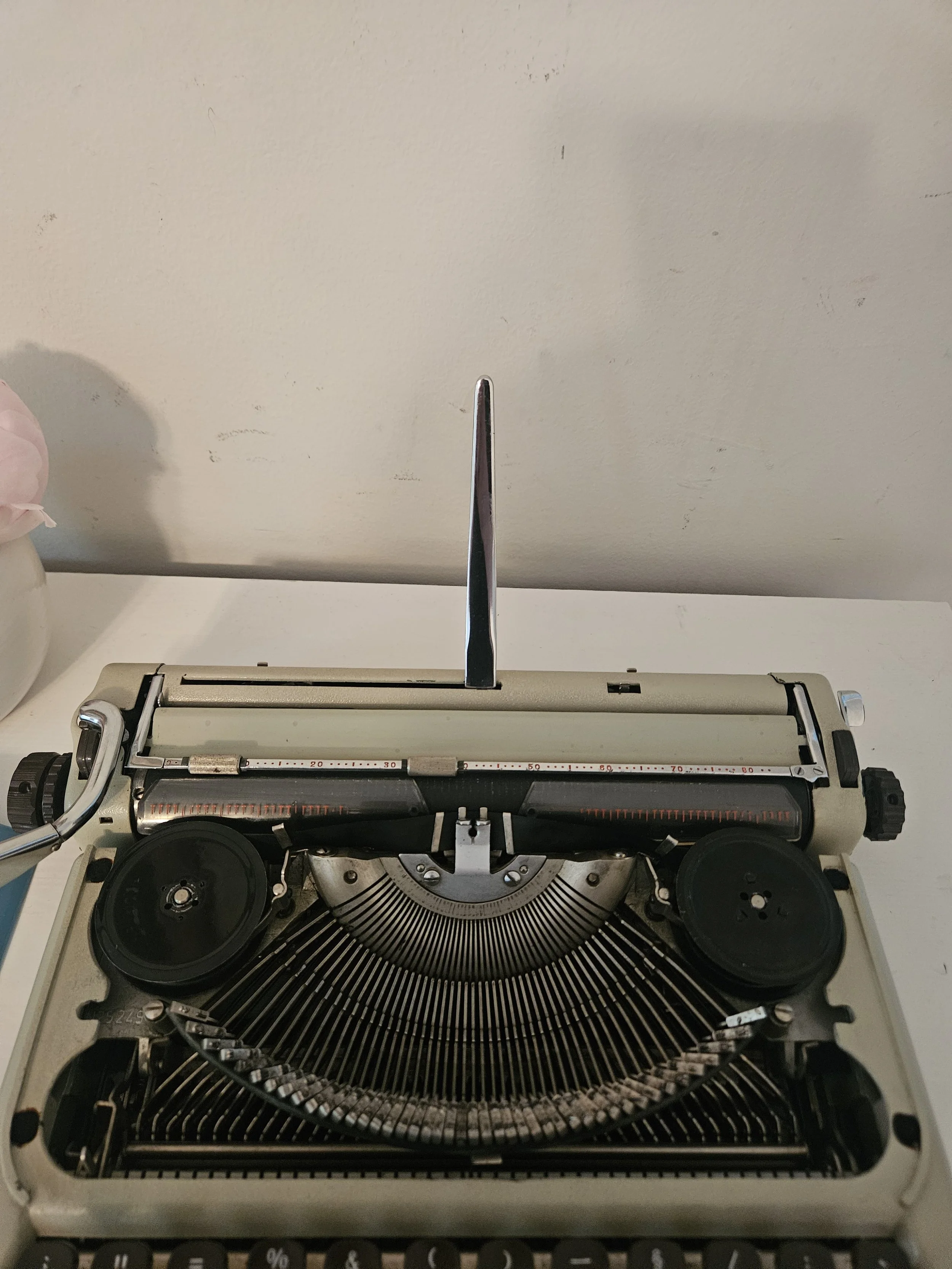
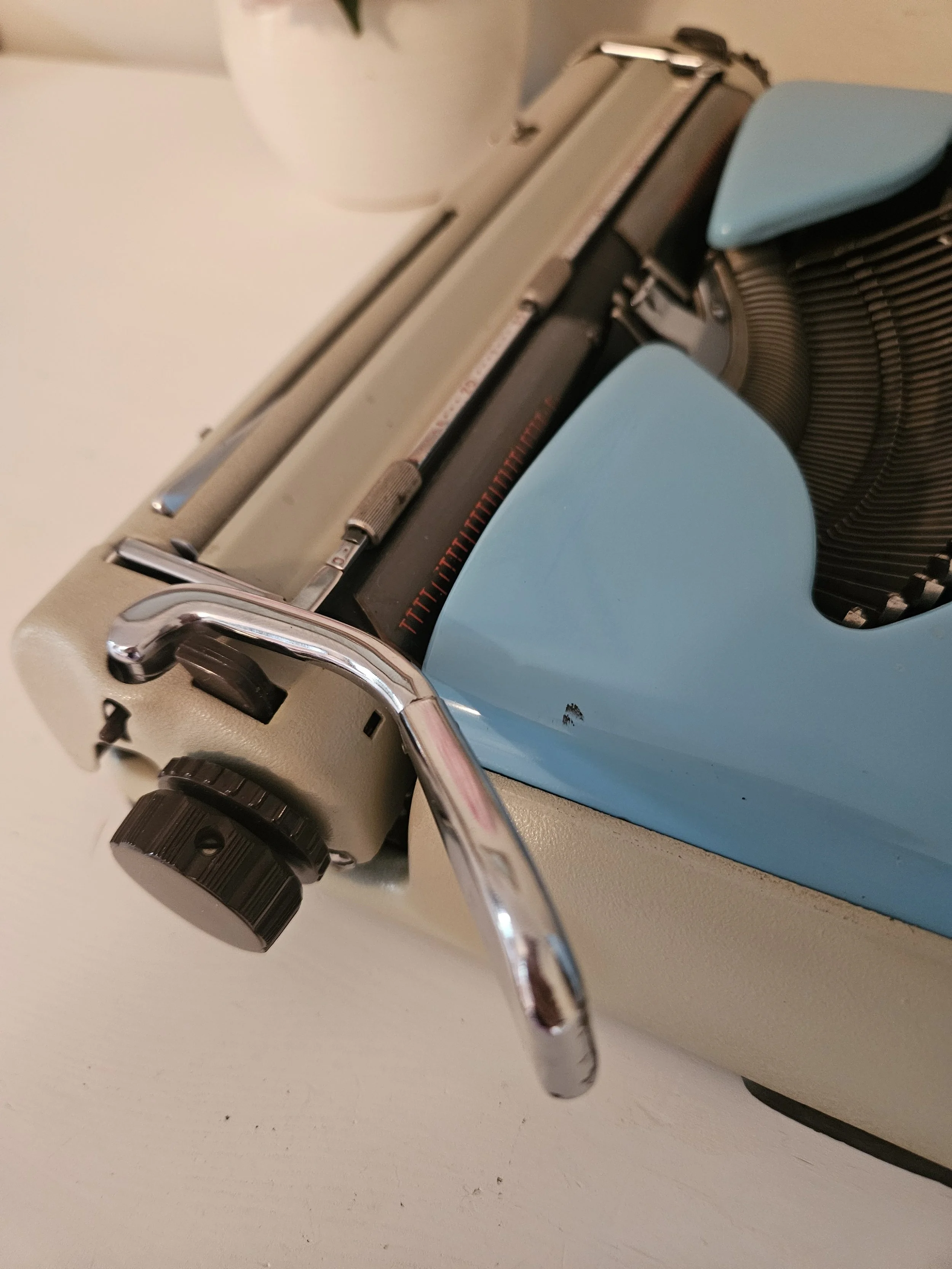
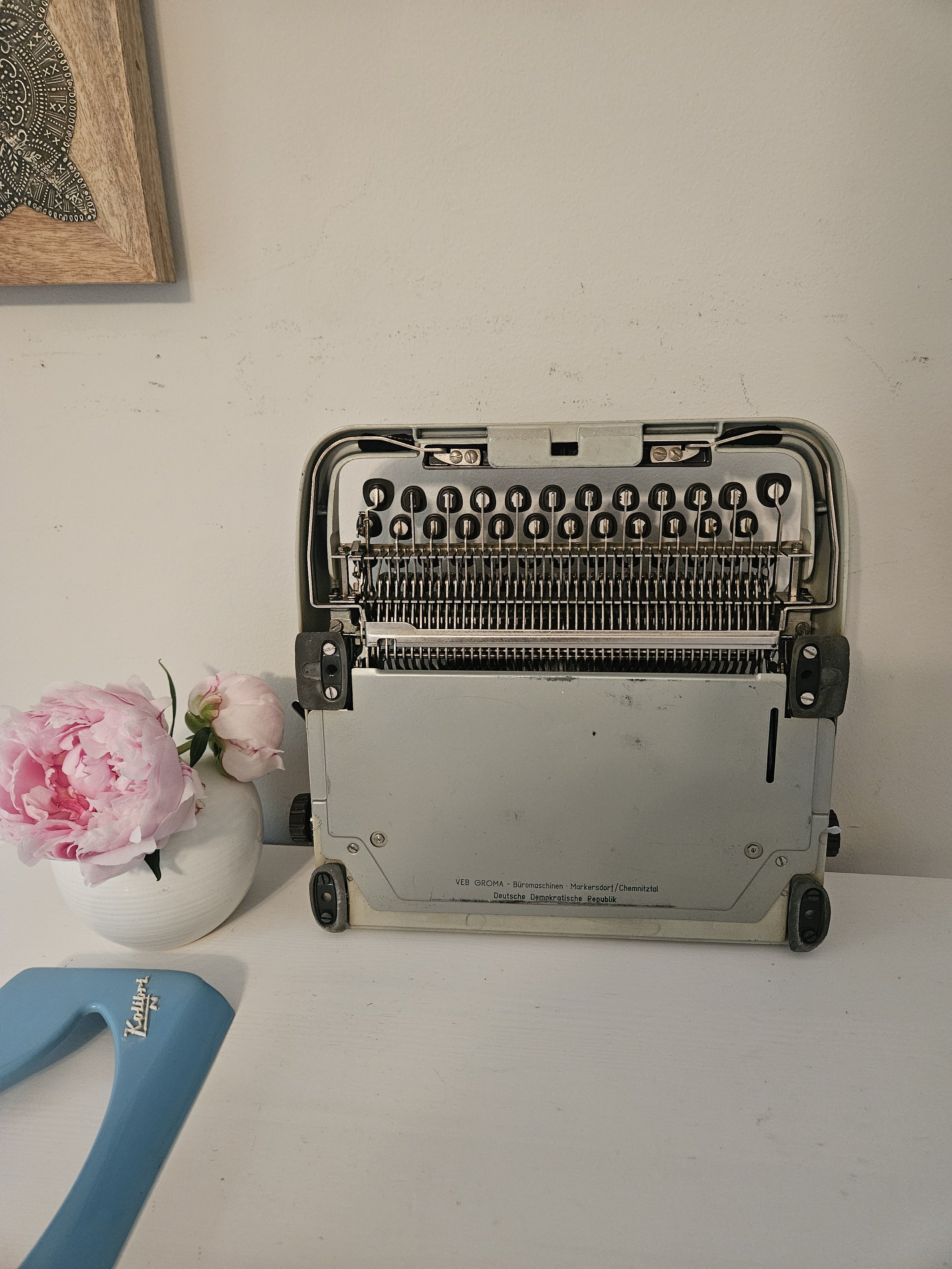
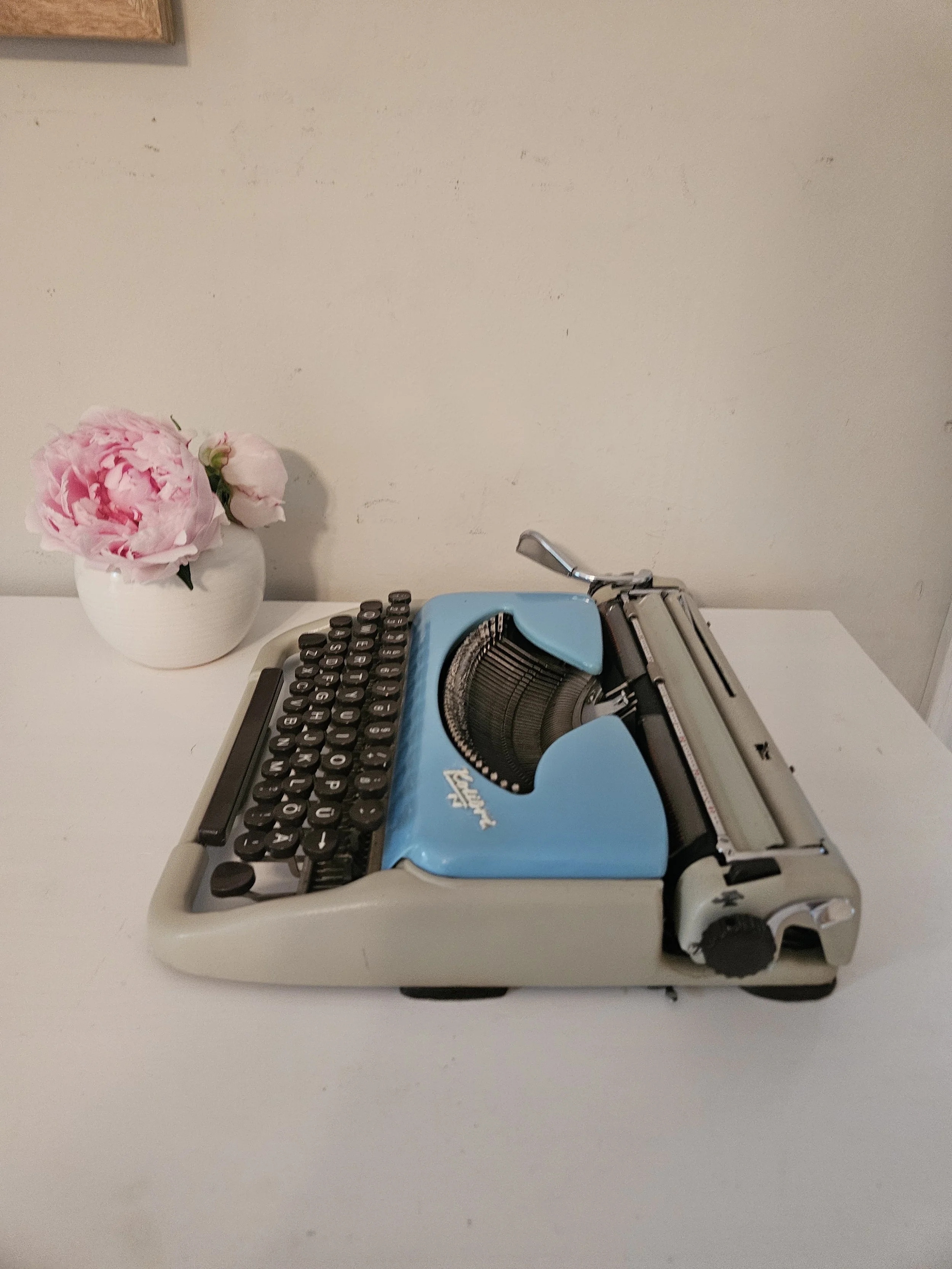
It stands just over two and a half inches high, a profile so low it competes with the Hermes Baby and the French Rooy for the title of slimmest postwar portable. The carriage return lever folds down flush with the body so the machine can drop into its low-profile case, and the entire shell — save for the rubber feet, platen, and plastic keytops — is steel.
Bulletproof is an apt description.
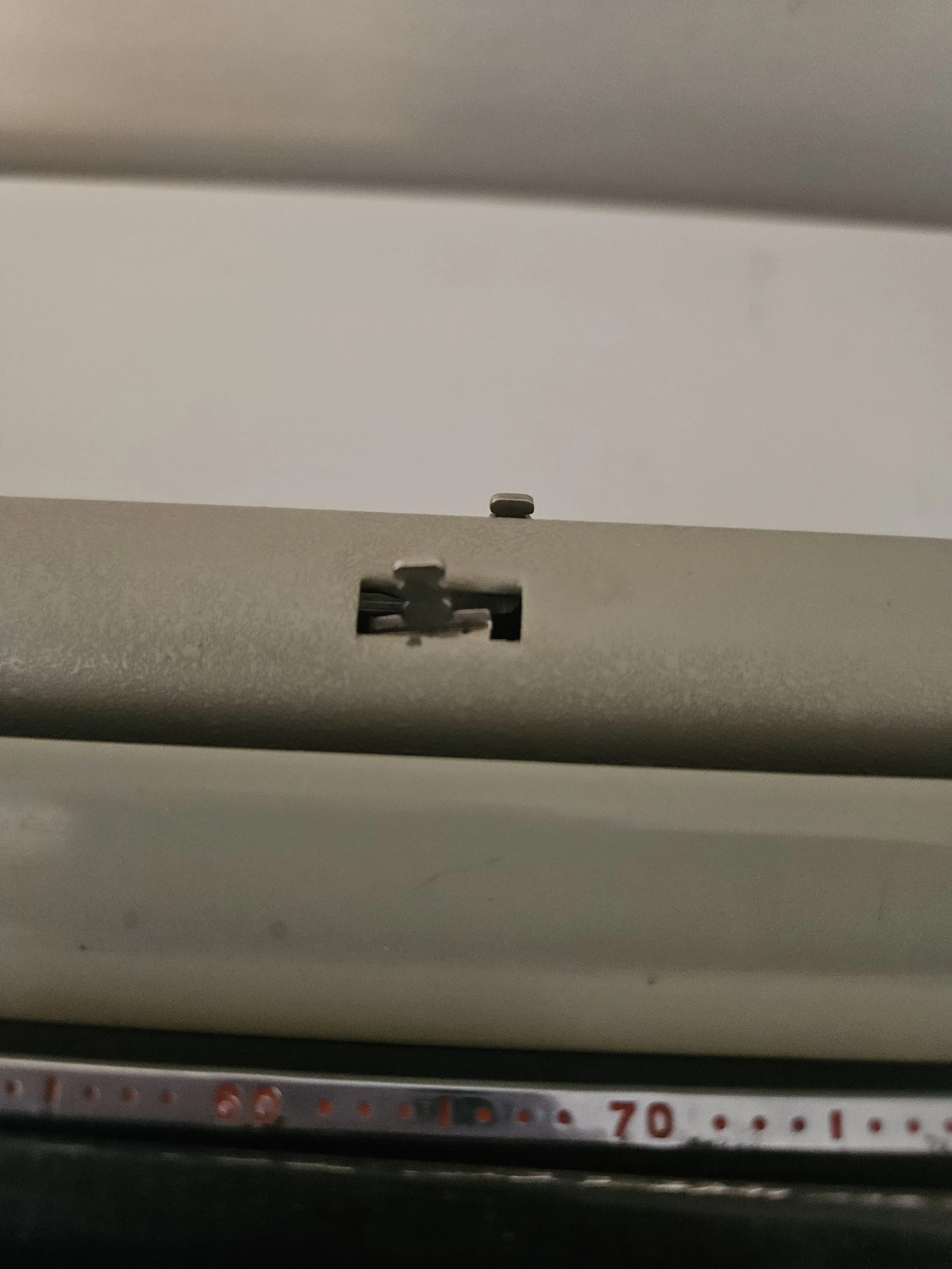
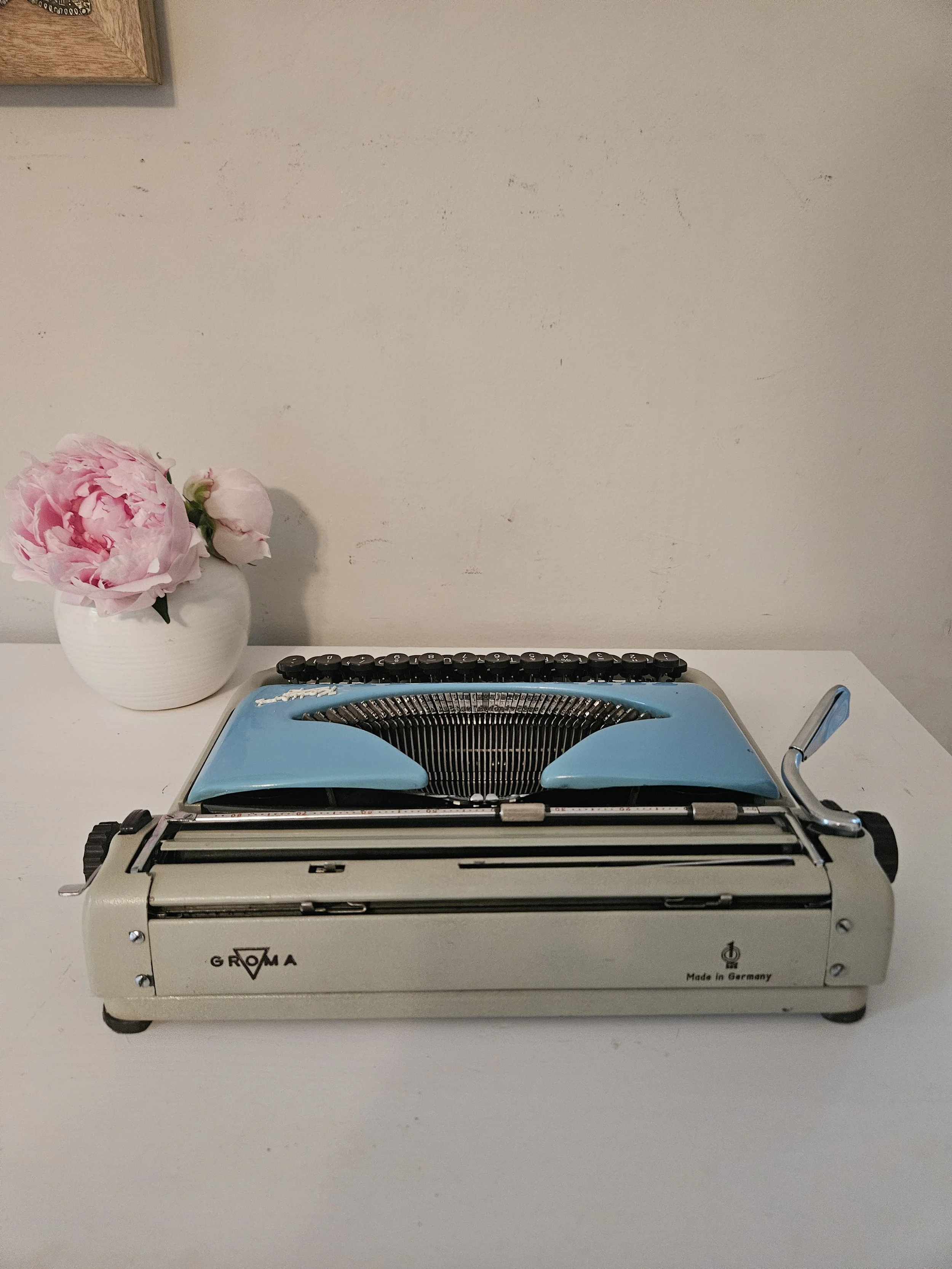
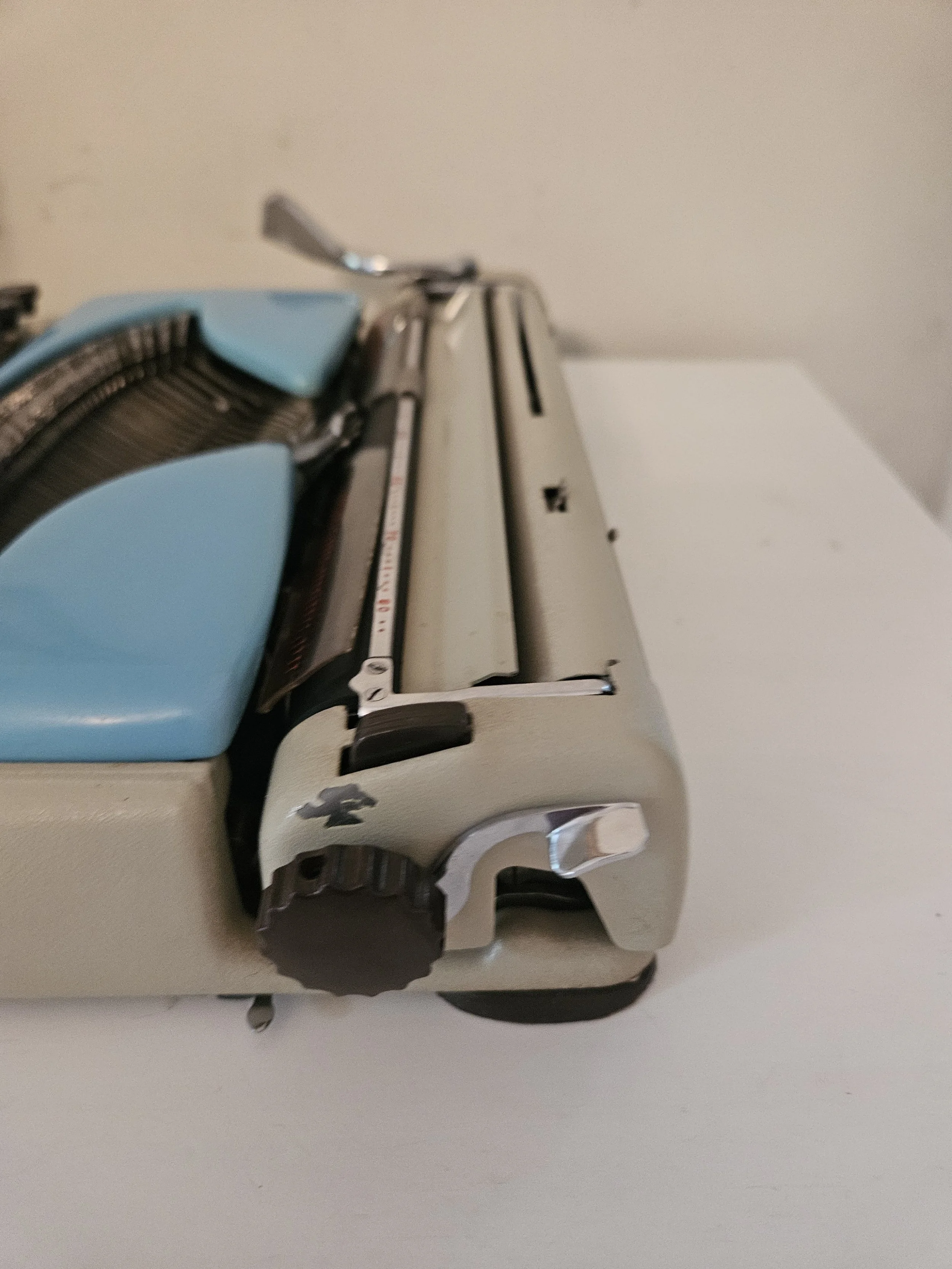
The Kolibri N is an upgraded later model… a little more rounded with unique features like the paper support that doubles as a carriage lock when closed.
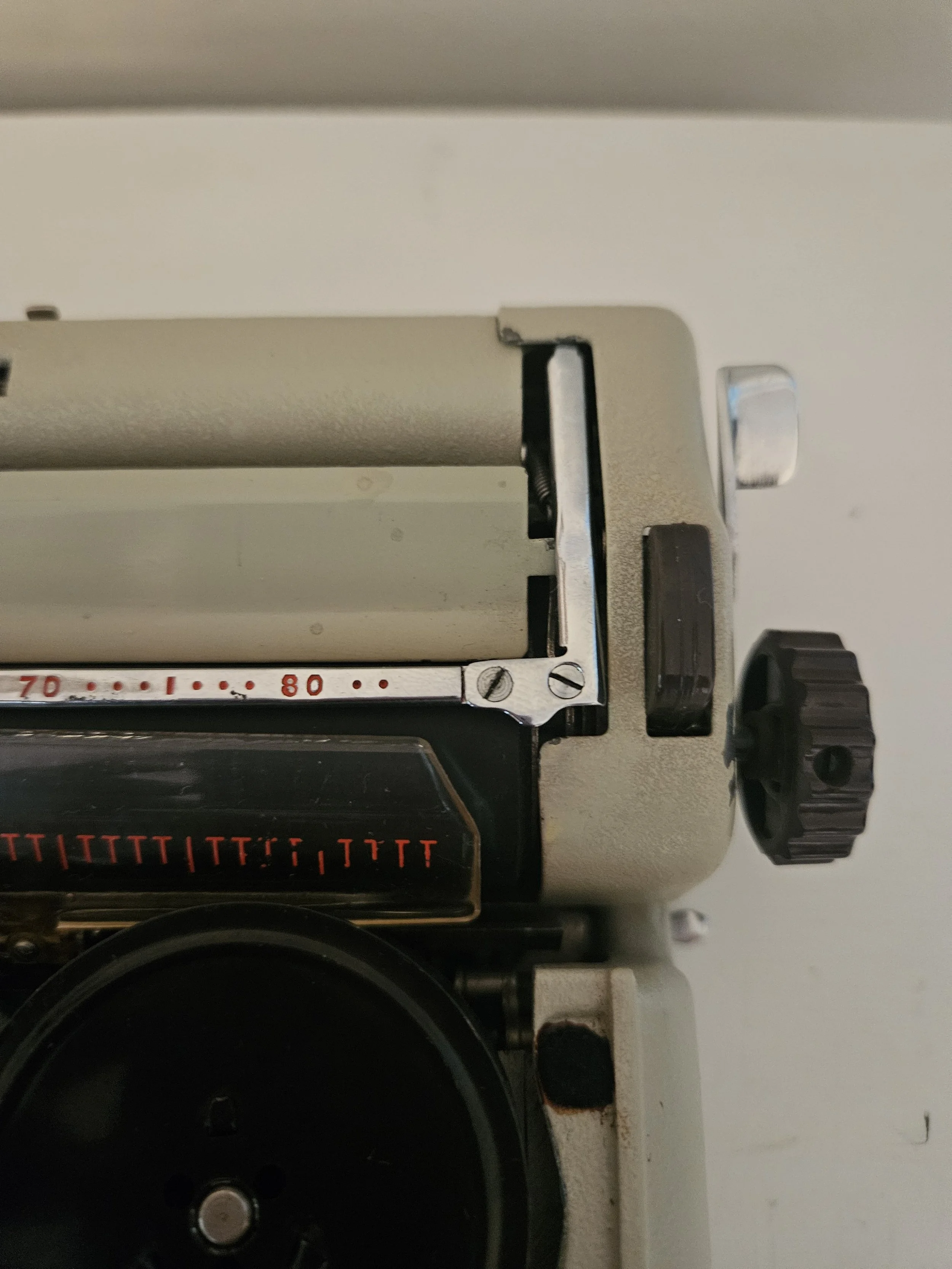
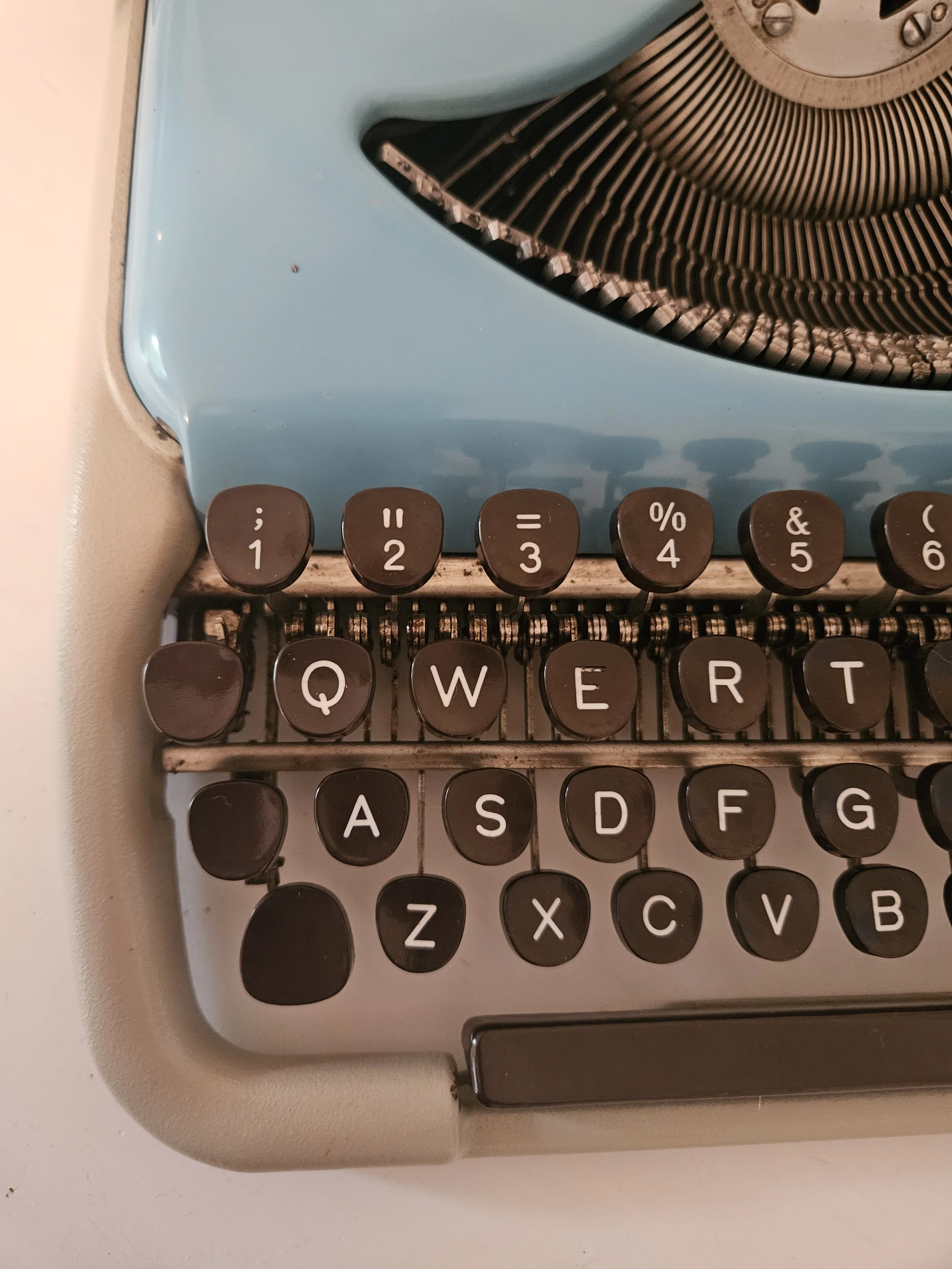
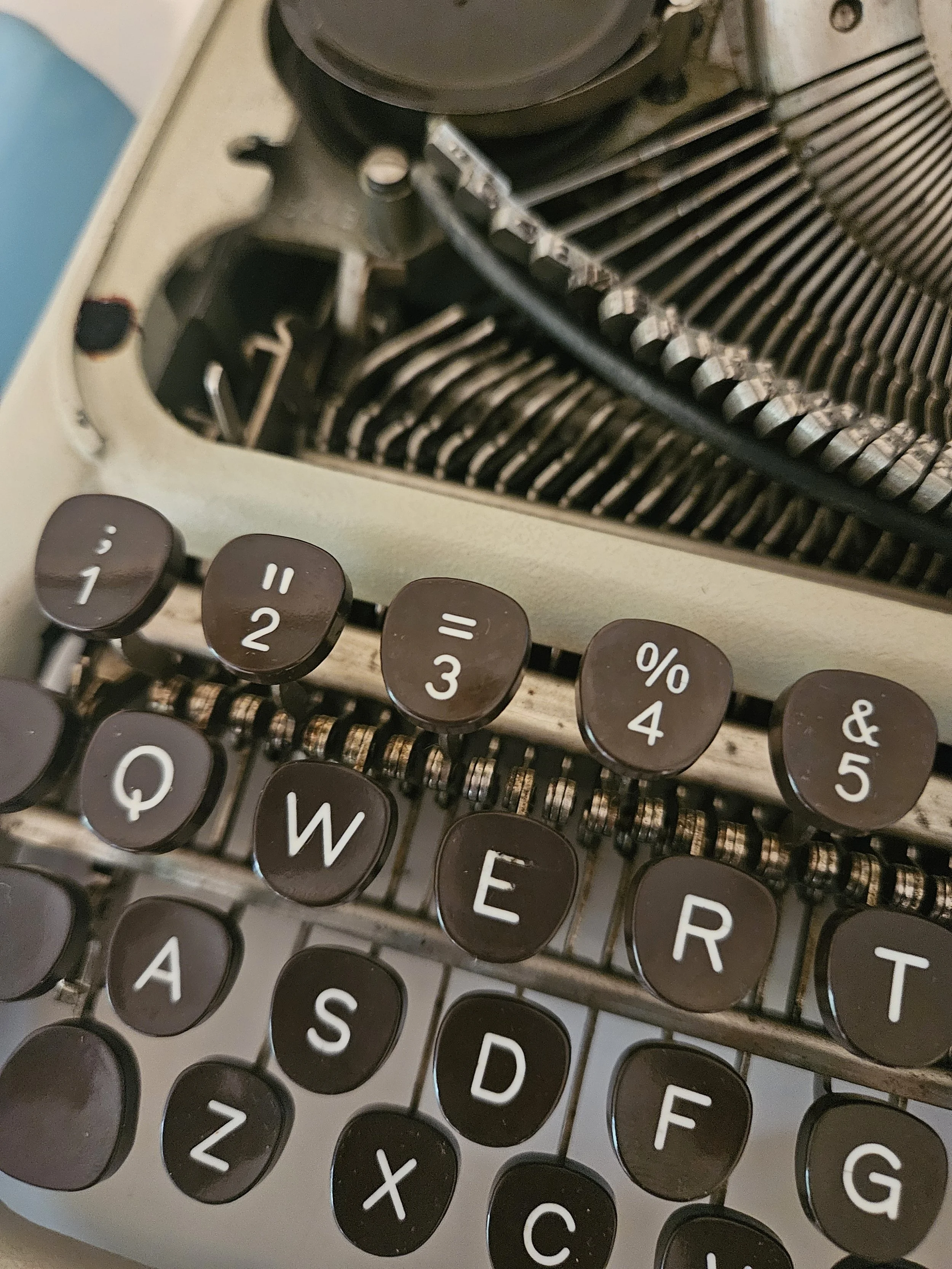
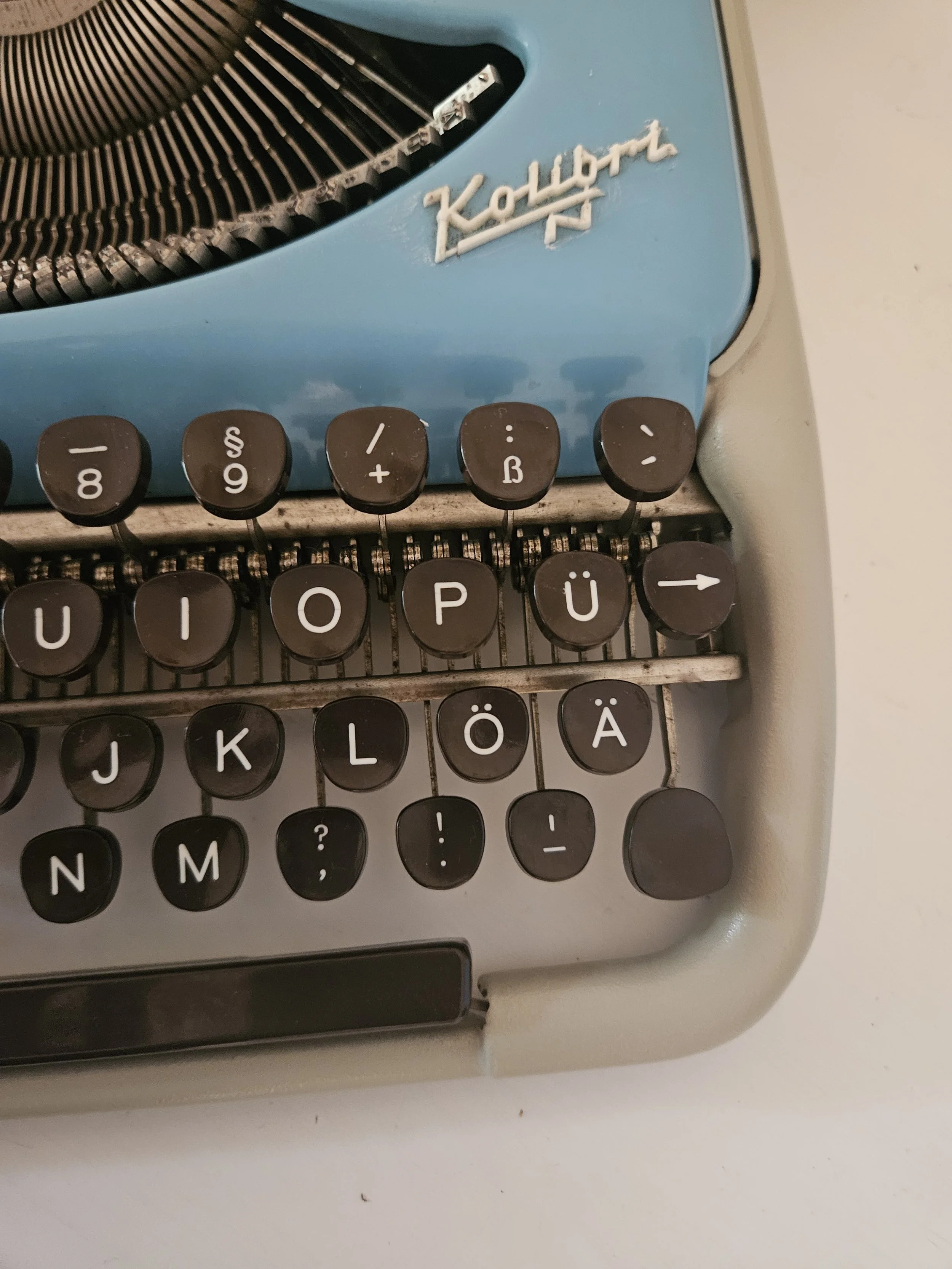
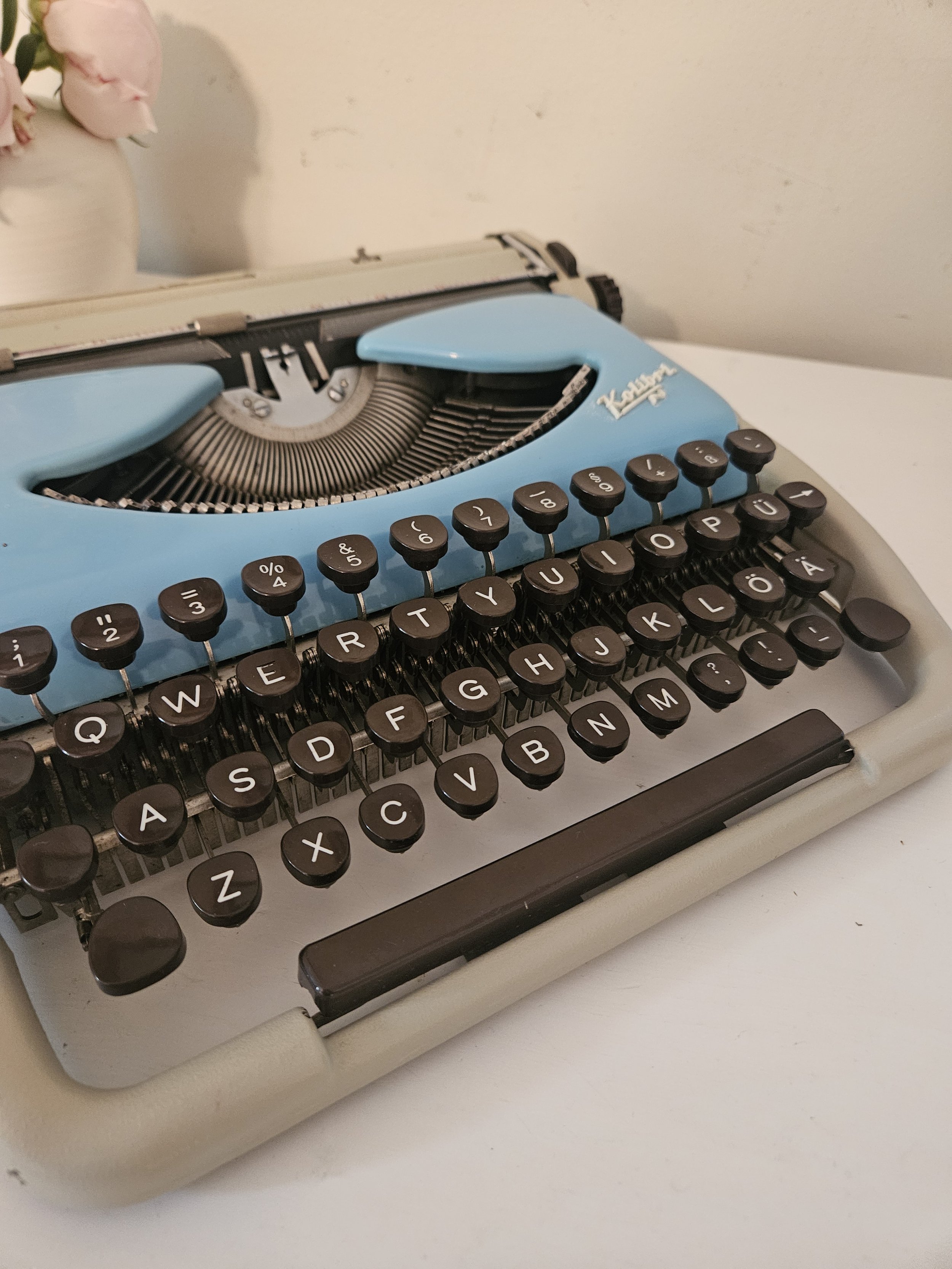
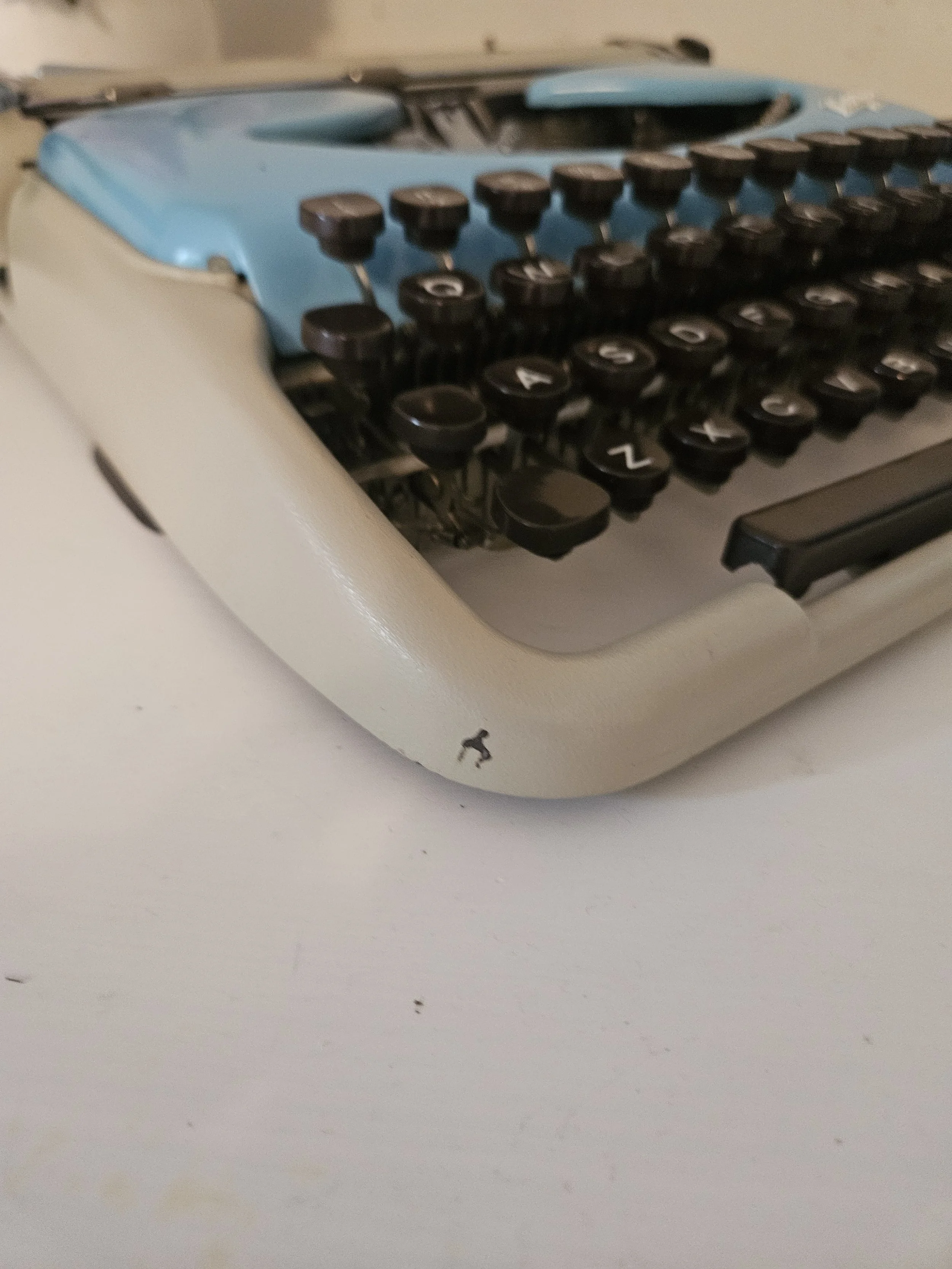
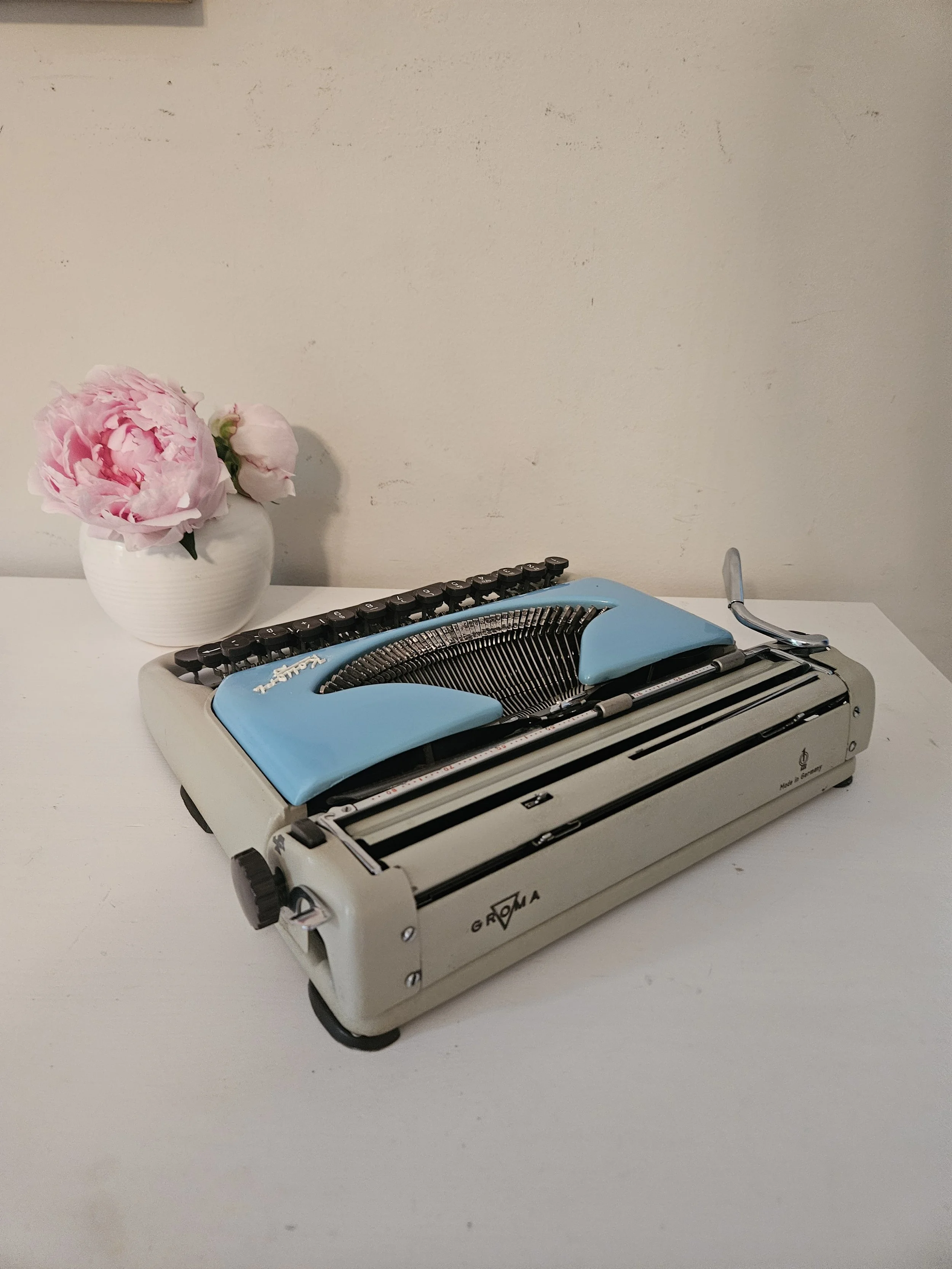
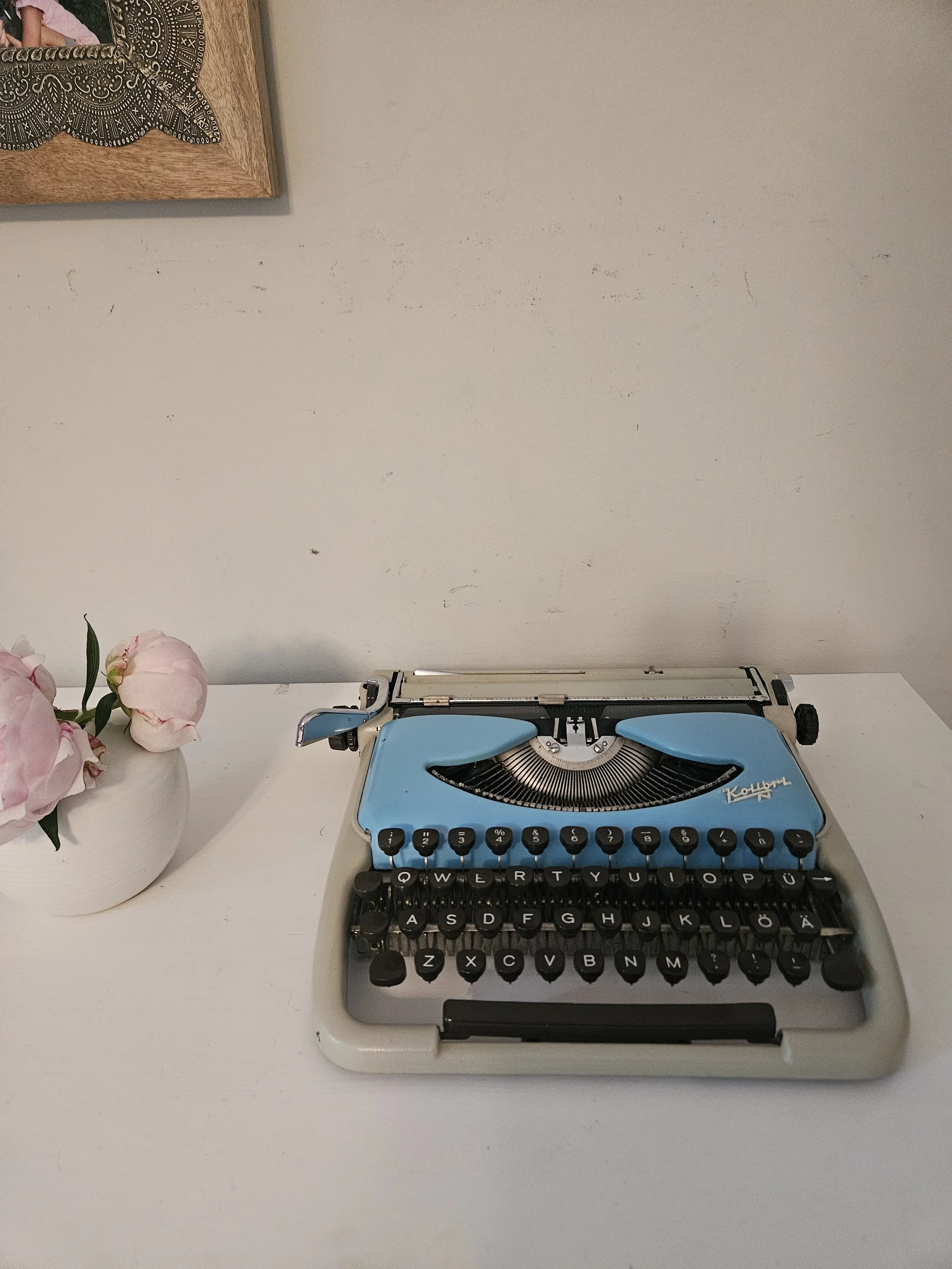
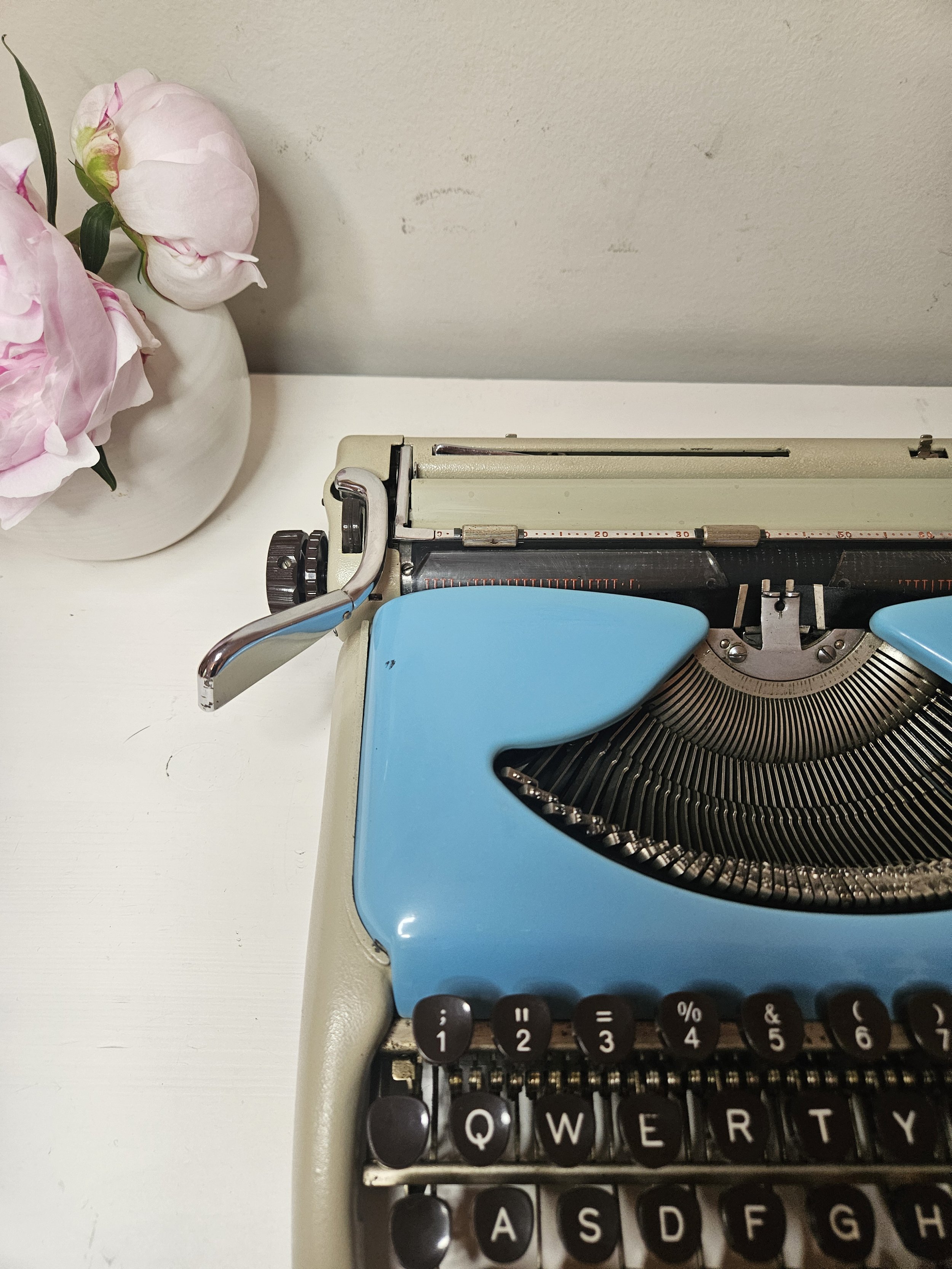
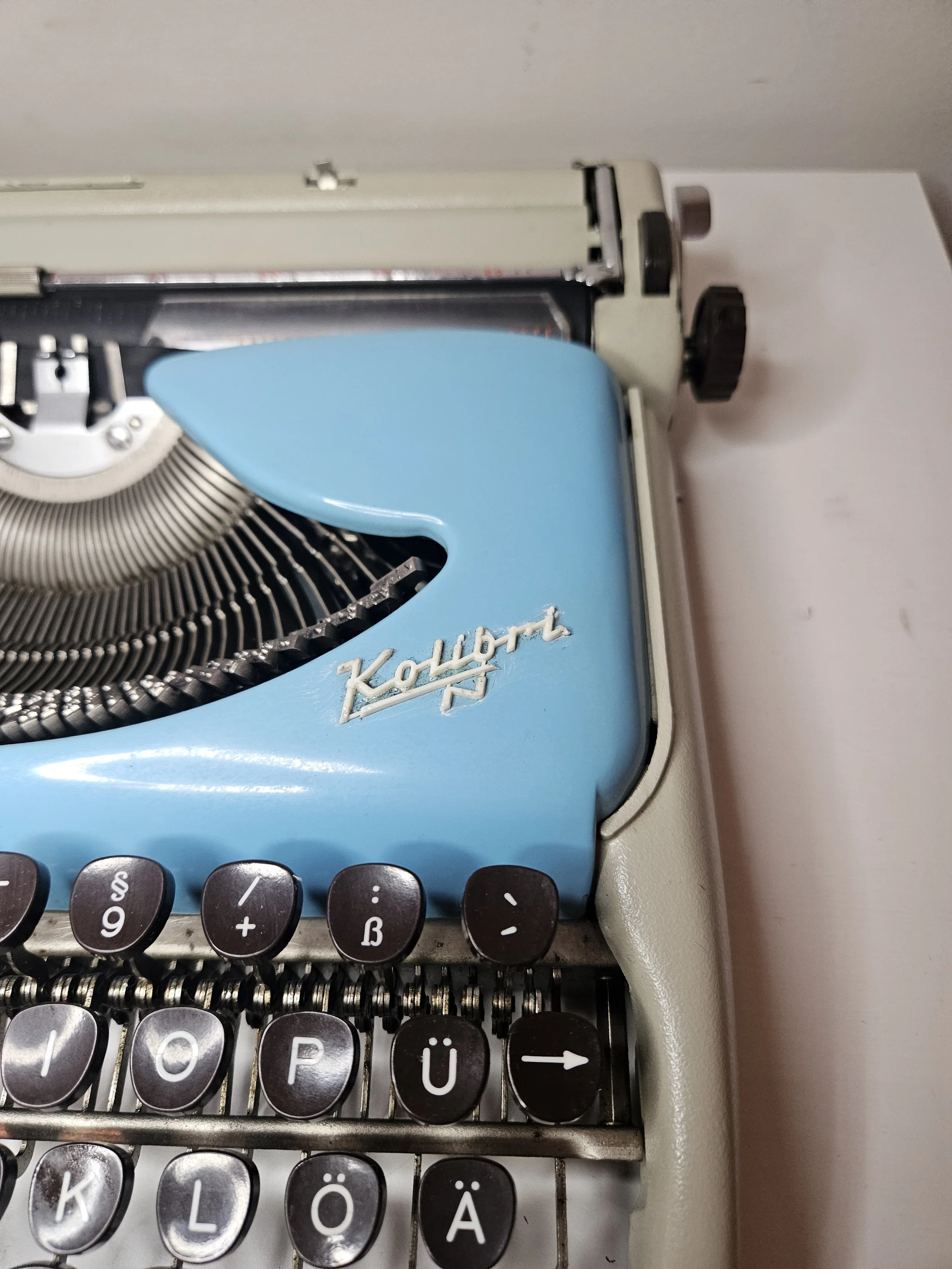
This particular example wears one of the most striking color schemes Groma ever offered: a soft cream-sage body paired with a sky blue ribbon cover and paper table, accented by chocolate brown squircle keys. The bottom is crinkle paint… the top is smooth gloss. There is very little wear in the paint. You can see a few spots on the bottom and by the carriage knob.
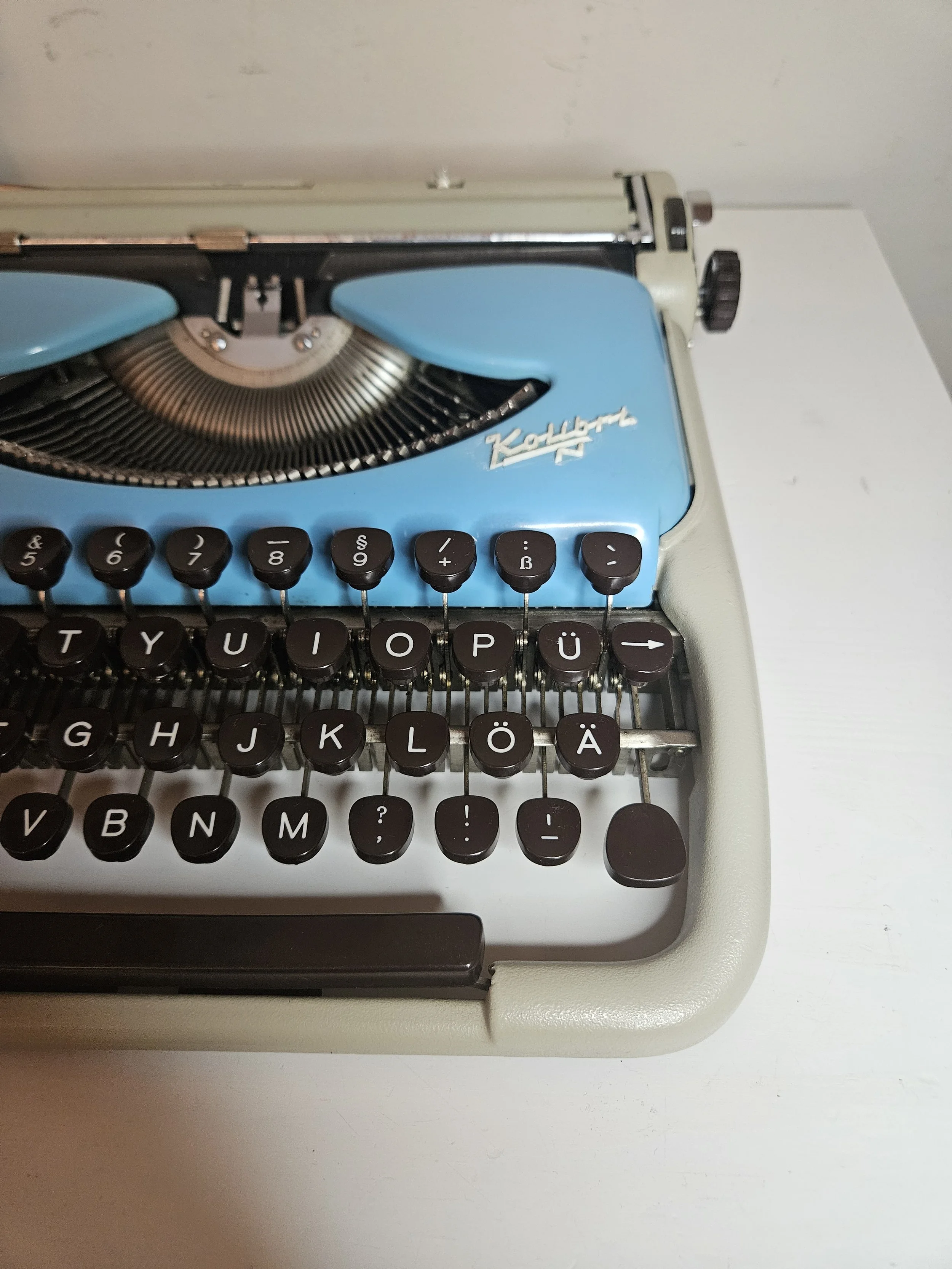
It carries the QWERTY keyboard… the German QWERTZ keyboard with the full complement of umlauts (ü, ö, ä) and the eszett (ß) was converted. So you'll still have the accent keys on the right. Good in case you’re studying German etc.
It is a typewriter reached for by a generation of European writers who wanted something that would fit in a coat pocket and still feel like a serious instrument under the fingers.
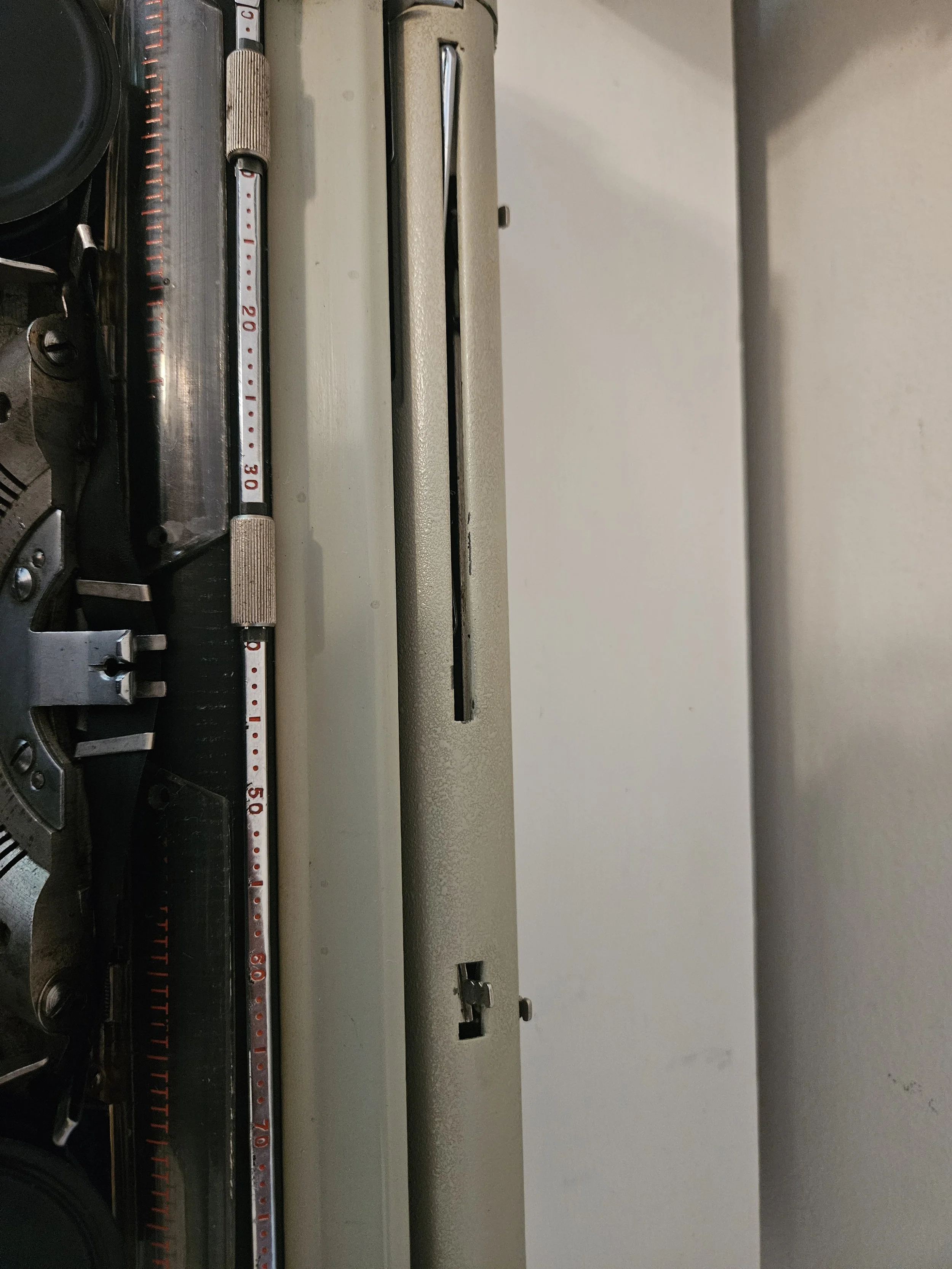
This Kolibri N is in working order and ready to write. As noted, the small plastic margin button covers and the paper support activation button cover are missing — these tiny plastic caps were the weak spot of the design and are commonly absent on surviving examples. The mechanism beneath them functions normally; only the cosmetic caps are gone. The machine includes its original case and ships with a one-year warranty.
Specifications
Manufacturer: VEB Mechanik Groma, Markranstädt, East Germany (GDR)
Model: Kolibri N
Era: circa1962
Color: cream/sage body with sky blue ribbon cover; chocolate brown keys
Keyboard: German QWERTZ with ü, ö, ä, ß
Pitch: 10 characters per inch (pica)
Paper capacity: accepts standard 8.5 × 11 inch paper
Ribbon: universal size, black (manual reversal via lever beneath spool cover)
Dimensions: approximately 11.5 in wide × 11 in deep × 2 in high
Weight: approximately 8.5 lb
Construction: all-steel body with plastic keytops and rubber feet/platen
Condition: working order; missing plastic margin button covers and paper support activation button cover (cosmetic plastic caps only — mechanisms function)
Includes: original case
Warranty: 1 year