
The Typewriters of Frank Herbert and Their Role in Shaping Dune

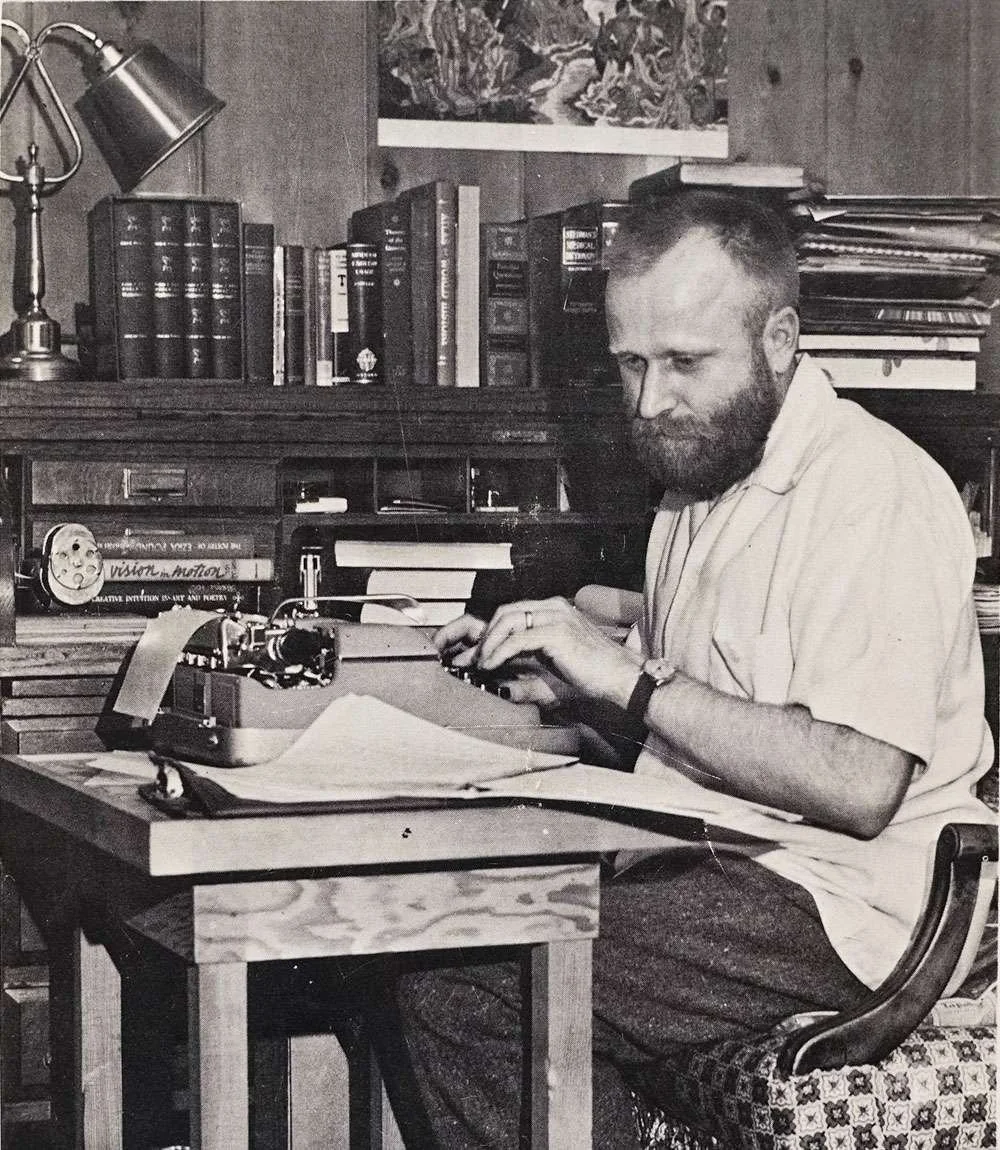
Frank Herbert Writing
Frank Herbert, the mastermind behind the science fiction epic Dune, is celebrated for his fecund world-building, philosophical openness, and elaborate storytelling. Though much has been written about his inspiration and research methods, less attention has been paid to the tools he used to bring his iconic universe to life. Chief among those tools was his typewriter—which helped Herbert hone in on the collective unconscious and hold profound wisdom in his mind (that he picked up in boyhood and beyond).
The Typewriter: A Writer's Trusted Companion
Precious little exists online about Frank Herbert’s typewriter choices. He’s pictured above with a pen, after all. All I could find, really, was a picture of him on an Olympia Sm3. Notice how he is typing with the case bottom still attached? That was a custom in prior times; not so much today. But it is the reason most typewriter case tops come off easily.
I also notice that physicality of the books surrounding him, and the old world pencil sharpener (some of us remember from the classrooms).
How The Machine(s) May Have Influenced The Creation of Dune
My whole thesis: the physicality of typing on a manual machine has a way of influencing a writer's rhythm and thought process.
For Herbert, this tactile effect seems obvious to me.
The typewriter’s influence include:
Precision Through Physicality
There’s just something methodical and diligent about the story’s unfolding, the immaculate and intricate universe, the layered characters… that mirrors the slow click and clack of typewriter keys. There is also a modularity in the storytelling that seems to have been influenced by the manual writing machine and the consideration of the physical page.Limited Distractions
Before internet access was rampant, Herbert could immerse himself fully in the world of Arrakis. This isolation from external interruptions may have helped him channel the singular vision required to create such a layered and immersive narrative. And also to hone in on the collective unconscious. (see below) . It’s a story that seems to have arisen out of deep silence and profound meditation; nowhere more evident than in between the individual books themselves.Iterative Thinking Through Rewrites
For the Screenless Writer, entire sections had to be retyped, encouraging Herbert to reflect deeply on his wording, structure, and pacing. This thorough consideration of every page, line, word, is evident throughout the Dune series. It’s also evident that he peppered in quotes and histories, often brilliantly self-referential.
In reading Frank Herbert’s biography, I was able to gain some insights into his influences, which have always fascinated me. They seem fairly broad and mystical, and also almost surpassing a personal understanding. The clack and rhythm of the keys can help a writer tap into the collective wisdom of the ages, and perhaps this provided some of the origin work for Dune, as well as his early interactions with Native American cultures as a boy.