
Olympia SM3 / SM4
‘Mercedes Benz of Typewriters.’
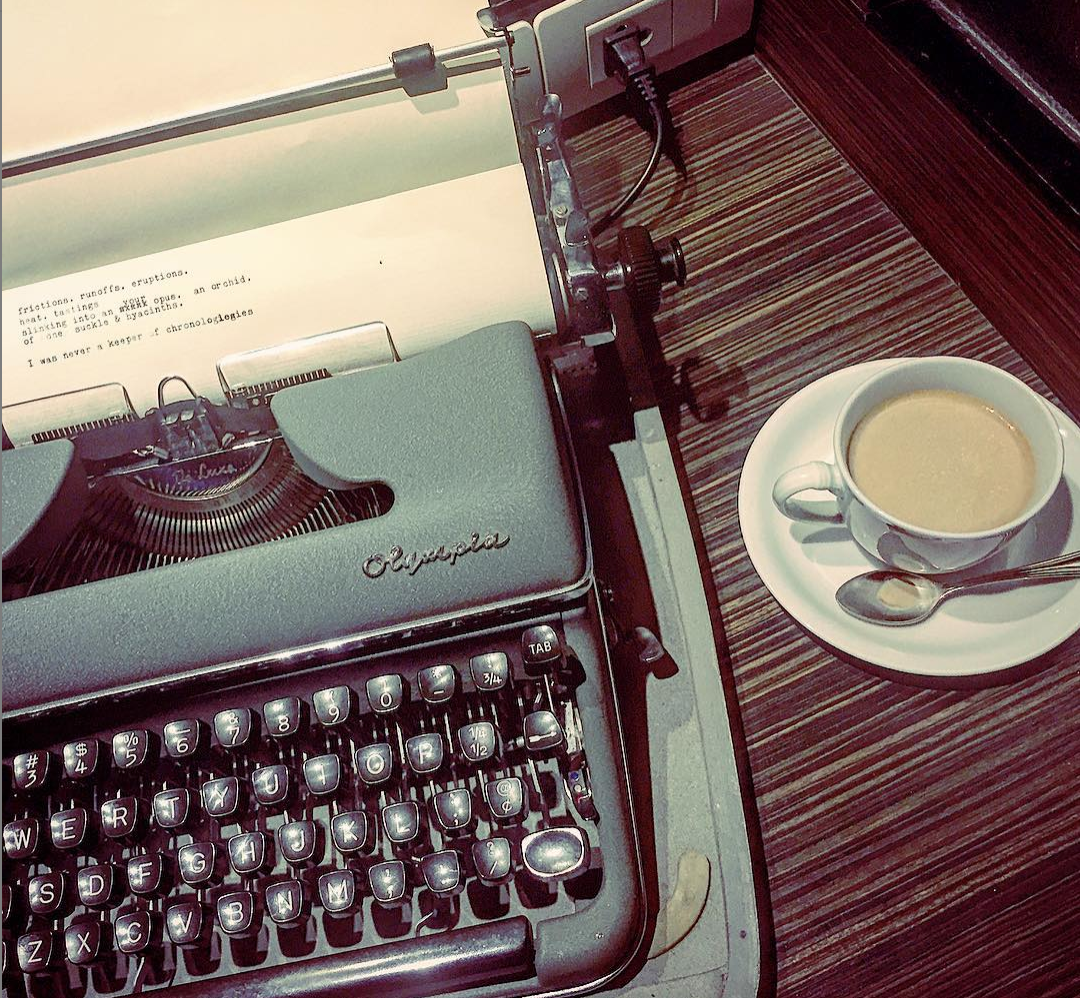


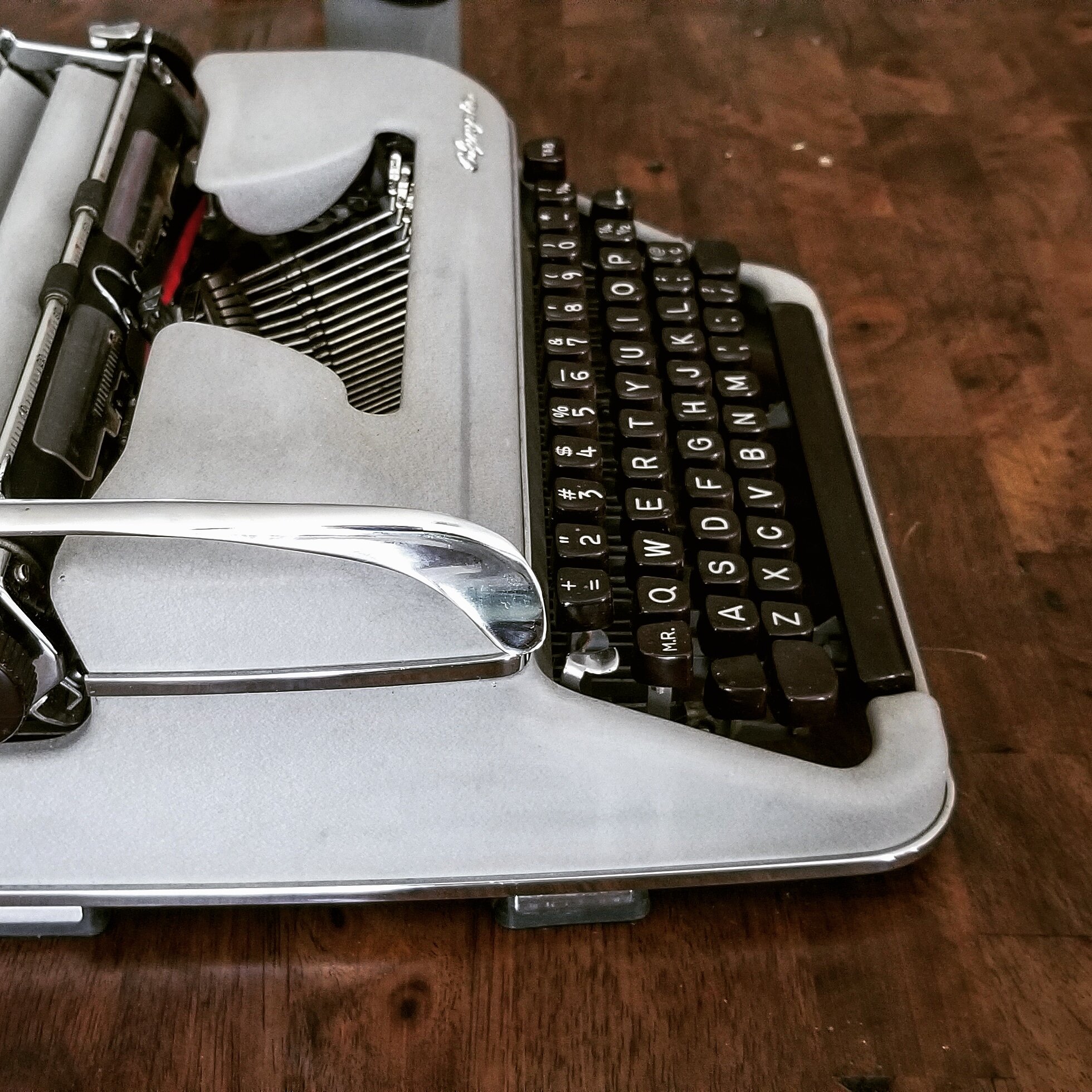


Welcome to one of history’s finest typewriters, lovingly restored for your writing pleasure.
Order now. In about 2 weeks, you’ll get a stunning, authentic, lovingly-restored specimen of this model in the condition selected.
***
This gorgeous machine is built like a tank, with lush crinkle paint that sparkles and decadent chrome details.
You’ll get a gorgeous Olympia SM3 or SM4 in working condition. All functions work as designed and this comes with a working guarantee.
(If you prefer one or the other, you can specify in form at checkout).
The SM3 has a longer spacebar, and physical tab keys in the rear; and the SM4 has a shorter space bar, and tab set and release keys on either side.
SM3: 1957–1963
The SM3 continued Olympia's portable line, building on the SM1 and SM2. It offered the refined typing action and build quality that established Olympia's reputation among portable typewriters. No tabulator.
SM4: 1960–1966
Identical machine with a tabulator added. Olympia introduced it as the upgraded option for typists who needed tab functionality—useful for business correspondence, invoices, and formatted documents.
Overlap: 1960–1963
For three years both models sold side by side, giving buyers a choice between the base SM3 and the tab-equipped SM4 at a higher price point. Once the SM3 was discontinued in 1963, the SM4 carried on alone until the SM5 generation arrived.
Comes with iconic formed case, painted silver.
There are some variations in key and platen knob colors.
It comes with the original molded case, a new ribbon, and a digital copy of the manual.
This legendary machine was once considered the Cadillac of typewriters. Made with precision in West Germany. Bulletproof is a good word to describe machines of this vintage..
This will last another 50 years with ease.
Features:
Fresh Ribbon, Installed
Auto-ribbon reversal and touch control
Original Case
Serif Font (12cpi or 10 cpi)
Single, 1.5, and double line spacing.
Tabulator features (manual or auto)
US QWERTY Keyboard
End of Line Bell
All Classic Typewriter Machines Include:
Fresh Ribbon installed on metal spools (vintage)
Video Tutorial with digital manuals
Digital copy of the manual.
Original Case.
Typewritten Sample.
Lifetime Tradein Policy
Classic Typewriter Working Guarantee
Lovingly restored by a master tech
Please let me know if you have additional questions.
Enjoy the writing!
I restore beautiful machines and put them in the hands of writers, poets, and dreamers.
When the inspiration strikes, be ready!™
If you have questions please don’t hesitate to ask! I want you writing, Screenless!
Most sincerely,
Steven Budden Jr.
Classic Typewriter Co.
Chapel Hill, North Carolina
RESOURCES
WHAT SETS US APART
Our Promise | Warranty | Working Guarantee | Lifetime Tradein Policy
@thevitruvianway on Instagram uses an SM3 he got from us to showcase his epic poetry.
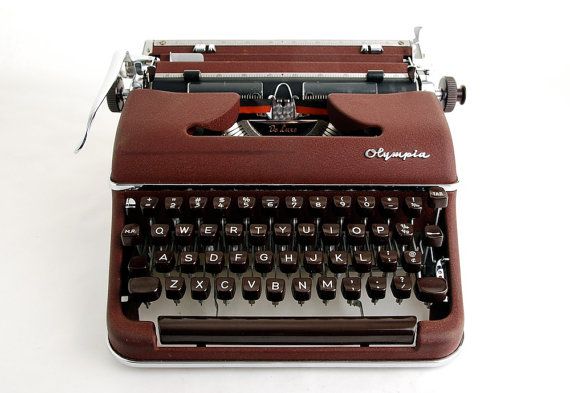
SM3 in an elegant color combination.

Woody Allen wrote every screenplay of his long career on an SM3.
The Olympia SM 3 appeared in 1951. It embodies the definition of classic of typewriter design. Marketed as a high-end machine, the SM brochure says:
“ ... the finest writing machine money can buy, with all the advantages of portability... It's built better - for life."
Olympia SMs were once considered the Mercedes Benz of typewriters. The Hermes 3000 and the SM3 & SM4 were the most expensive typewriters available at the time, so owners tended to care for them well.
The SM3 is beautifully engineered, down to the last detail. I’ve often opened one up and marveled at the polished metal finishes throughout. Most typewriter makers didn’t pay such fine attention to detail. Even the ‘De Lux’ inlay over the type bars in the SM 3 and the ‘S’ on the SM 4 are beautiful.
I’ve often marveled over one of these.
There are a few color combinations, most of the models being some variant of green. Sometimes, the keyboards vary in color, or the spacebar, or the platen knob. The rarer colors tend to cost more; black, burgundy, aquamarine.
You can tell an SM3 from an SM4 by the tab set and clear buttons on either side of the space bar, and a few other minor features. Other than that they are nearly identical. Some prefer the SM3 for the large spacebar, which facilitates fast (carefree) typing.
The cases are interesting; modernist inspired, ergonomic, and painted silver. Hewn of heavy plywood, they tend to hold together well. As with most typewriters, the bottom of the case detaches, so that you can type on it.
The late Olympia SM3s and Olympia SM4s are built with a spring beneath each key that keeps the key level during use… a brilliant concept that renders long typing sessions much more comfortable.
Because they are carriage-shift instead of basket shift, shifting to caps or alternate characters takes some learning after years of digital keyboards. If you prefer similar, robust engineering in a package that some consider less visually appealing, opt for an SM9. What you lose for in flash and chrome you gain in practicality for fast typing.
The other SMs (1,2,5,6,7,8) are less ideal for various reasons. Either they are more cheaply made or less practically designed.
SM3 and SM4 Recommended for:
Poets
Screenwriters (Woody Allen composed every screenplay he ever wrote on one of these)
Writers who prefer an elegant aesthetic
Thoughtful writers who prefer a deliberate, steady pace
Writers who may travel with their machine occasionally or who leave it on their desk or in their studio (for daily travel there are better-suited portable models)
Those who require a photogenic machine
Features
SM3
Paper Rest
Spring-Leveling Keys (on certain years)
Manual Tab Set / Clear
Duotone Type Settings
Durable Wooden Case with Detachable Base
SM4
Ruled Paper Rest
Spring-Leveling Keys
Auto Tab Cet / Clear
Duotone Type Settings
Durable Wooden Case