
Every Benefit of Writing on a Typewriter
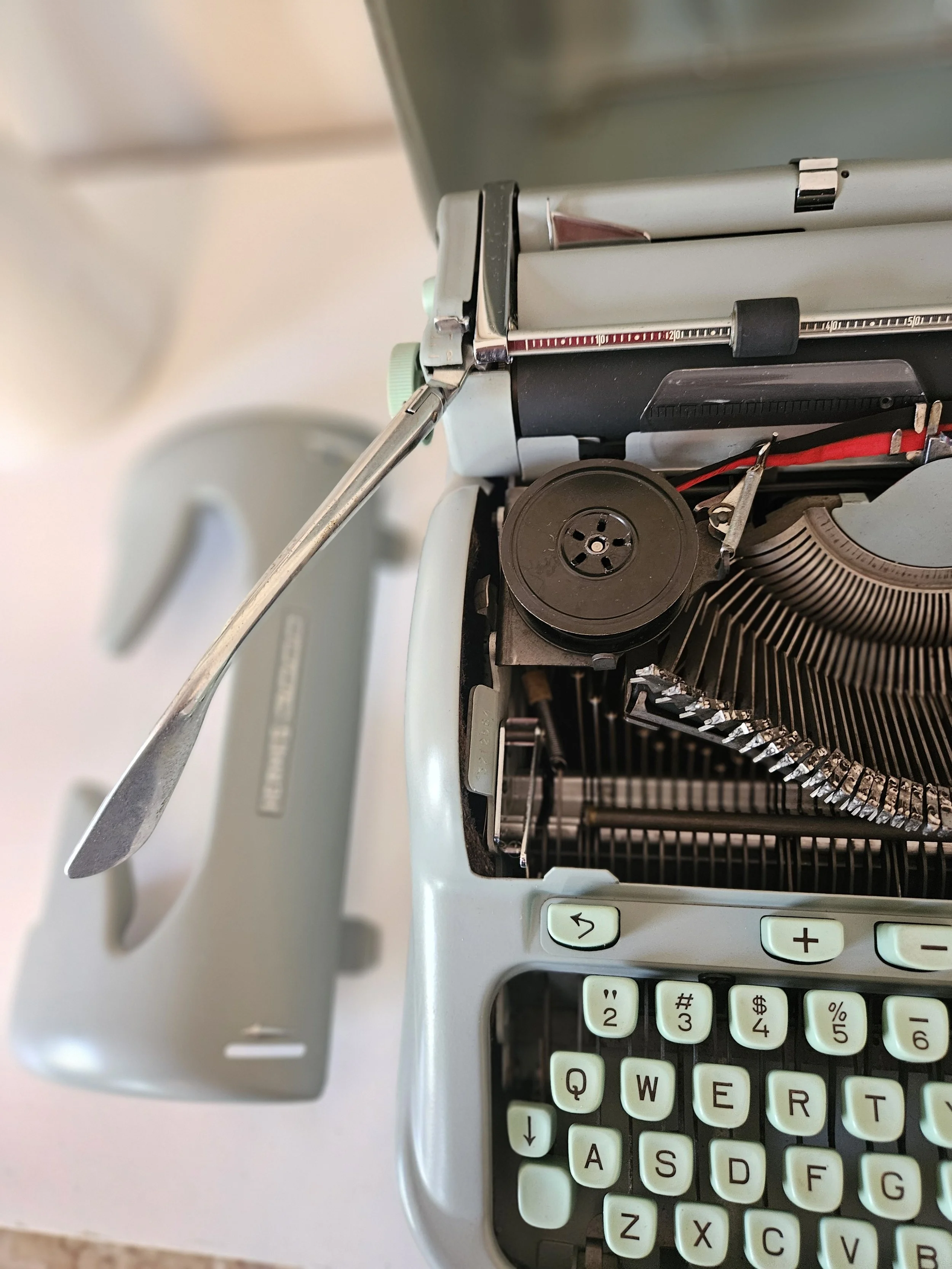
Legendary Hermes 3000.
A working catalogue — attention, craft, body, soul, and the long life of a machine built to last.
Through Classic Typewriter, we’ve shipped more than 2,000 restored machines to writers, collectors, and people who simply wanted one beautiful thing on the desk that doesn't need charging. In that time I've heard nearly every reason a person comes back to the typewriter.
Some were movie stars, housewives, CEOs, songwriters, teenagers, builders, crafstmen, writers, etc. You name it.
So here it is. Not an argument. A catalogue. Everything the machine gives you, sorted by what part of you receives it.
I. Attention
One task, one tool. A typewriter does exactly one thing: it puts words on paper. There is no second function to drift toward.
No notifications. Nothing pings. Nothing buzzes. Nothing slides in from the top right corner while you're mid-sentence.
No tabs. You cannot "just check something quickly." The research machine is in the other room, where it belongs.
No autocorrect editorializing. Your voice is not quietly sanded down into something safer by a prediction engine.
No blinking cursor of judgment. The page is patient. It waits the way paper has always waited.
Deep work is the default, not the achievement. You don't need an app to block distractions. The machine is the block.
Session boundaries are physical. You sit down, you roll paper in, you type, you pull the page. The work has edges. Screens have no edges.
No infinite scroll adjacent to your draft. The nearest doom loop is a room away.
It cannot be updated out from under you. No new interface on Tuesday. No feature you didn't ask for.
II. The Mind
It slows thought to a workable speed. Speed is very often the enemy of quality. A typewriter meters your thinking to roughly the rate at which good sentences form.
It kills premature editing. You cannot endlessly re-tinker with paragraph one. You move forward because moving forward is the only direction available.
It rewards thinking before typing. With no delete key, you compose the sentence in your head first. This is the single largest craft upgrade most writers ever make.
It teaches you to trust your first instinct. And it turns out your first instinct is better than you think.
Memory returns. Spelling, structure, phrasing — the things we outsourced come back with practice.
It externalizes the mechanism of the mind. You can watch the thought move, cog by cog, lever by lever. Few tools make cognition visible.
Drafting and editing become separate acts again. The typewriter drafts. The desk edits. Two different states of mind, no longer collapsed into one.
Word count stops mattering. Pages matter. Pages are honest.
It reduces decision fatigue. No font choice, no formatting, no margin adjustments masquerading as progress.
III. The Body
Writing becomes physical. Fingers, forearms, shoulders, breath. Steiner distinguished soul work from body work; the typewriter is a rare bridge between the two.
Tactile feedback with every character. The key travel, the slug strike, the paper's give. Your hands know what they're doing.
Sound as rhythm. The clack is a metronome. Writers describe falling into cadence the way runners fall into stride.
Posture improves. No hunching toward a glowing rectangle six inches from your face.
No blue light. No screen at all — which means it can be the last thing you do before bed instead of the thing that ruins your sleep.
Eye strain disappears. Ink on paper reflects ambient light. It does not emit it into your face.
It builds real stamina. The first pages hurt. Then they don't. Then you can write for hours.
IV. The Work Itself
Finished drafts. This is the most common report I get, verbatim: I finally finished my book.
A visible, physical stack. Progress you can hold and weigh. A word count file does not accumulate on a desk.
Nothing is ever lost. No corrupted file. No unsaved document. No cloud sync failure. No hard drive death.
No version confusion. There is one draft. It's the one in your hand.
Marginalia and revision by hand. A typed page invites the pen. Two passes, two tools, two minds.
It's a natural first-draft machine. Type it, then transcribe it. The transcription is a free, forced second edit — and it's the best editing pass most writers never knew they were missing.
Constraint breeds invention. Every serious art form is defined by its limits.
Serendipity survives. Typos, misalignments, and imperfect strikes occasionally produce something better than what you intended.
V. Soul and Spirit
Permanence changes how you write. Ink pressed into fiber is a commitment. Commitment lends weight to what would otherwise be a wisp.
It makes ephemera real. The impression is eternal — even for a thought you'd have discarded on a screen.
Solitude without loneliness. You are alone with the work, but the machine is a companion in it.
It's a form of resistance. In a throwaway society, choosing a tool built to last a lifetime is a small revolutionary act.
It resists surveillance entirely. Nothing is logged, harvested, trained on, or sold. What you write is between you and God.
It cannot be used by AI, and AI cannot be used by it. Whatever comes out of it is yours.
It restores wonder. Children love typewriters because they aren't yet dead to magic. Adults love them because they remember being that way.
It re-enchants ordinary attention. Writers describe the same thing after a few weeks: color returns to the flowers, and the people you love catch your eye again.
VI. Other People
Typewritten letters land differently. I have never once heard of a recipient forgetting one.
It's an artifact of care. The recipient knows you couldn't undo a mistake — and sent it anyway.
It starts conversations. Guests will always ask about the machine on your desk.
It's a family object. Children can use it, learn on it, and inherit it.
It teaches kids cause and effect. Press, strike, mark. A closed loop they can see.
It creates community. Type-ins, correspondence circles, collectors, repair people. A living culture, not a subreddit.
Correspondence comes back. A dying art, revived by a single machine on a single desk.
VII. The Machine as Object
Built to be repaired, not replaced. Golden-age machines (roughly 1940–1965) were engineered on the assumption of a fifty-year service life.
Over 2,000 parts, every one with a purpose. A skilled technician can fully disassemble and reassemble one without a screw left over.
No batteries, no charger, no power. It works in a cabin, a desert, a blackout, a plane.
It works anywhere on earth. One client took a Remington into the Egyptian desert to write.
Portable models genuinely travel. Case, handle, done.
Maintenance is simple and learnable. Clean it, oil it, change the ribbon. You can do most of this yourself.
Consumables are cheap and available. Ribbon and paper. That's the entire operating cost.
It appreciates rather than depreciates. A well-kept golden-age machine holds or gains value. Your laptop is worth less than it was this morning.
It's beautiful. Glass keys, chrome, enamel, script badges. It earns its place on the desk before it types a word.
It's a lifetime purchase. Possibly a multi-generational one.
VIII. Sustainability and Ownership
Zero electricity in operation. The lowest-carbon writing tool that isn't a pencil.
No e-waste. Nothing to landfill in three years.
Restoration over manufacture. Every machine returned to service is one not built from raw material.
You own it outright. No subscription, no license, no terms of service, no account that can be suspended.
It cannot be bricked. No company can decide your tool is end-of-life.
No planned obsolescence. There was no such concept when yours was built.
IX. The Practical Case
One-time cost, no recurring spend. Compare against a decade of software subscriptions.
It's tax-deductible for working writers. A legitimate tool of trade.
It's a serious gift. For graduations, weddings, milestones — a gift that outlives the giver.
It's a resale asset. Restored machines have a real, liquid market.
It's a legacy object. Someone will own yours in 2090. Your files will not exist.
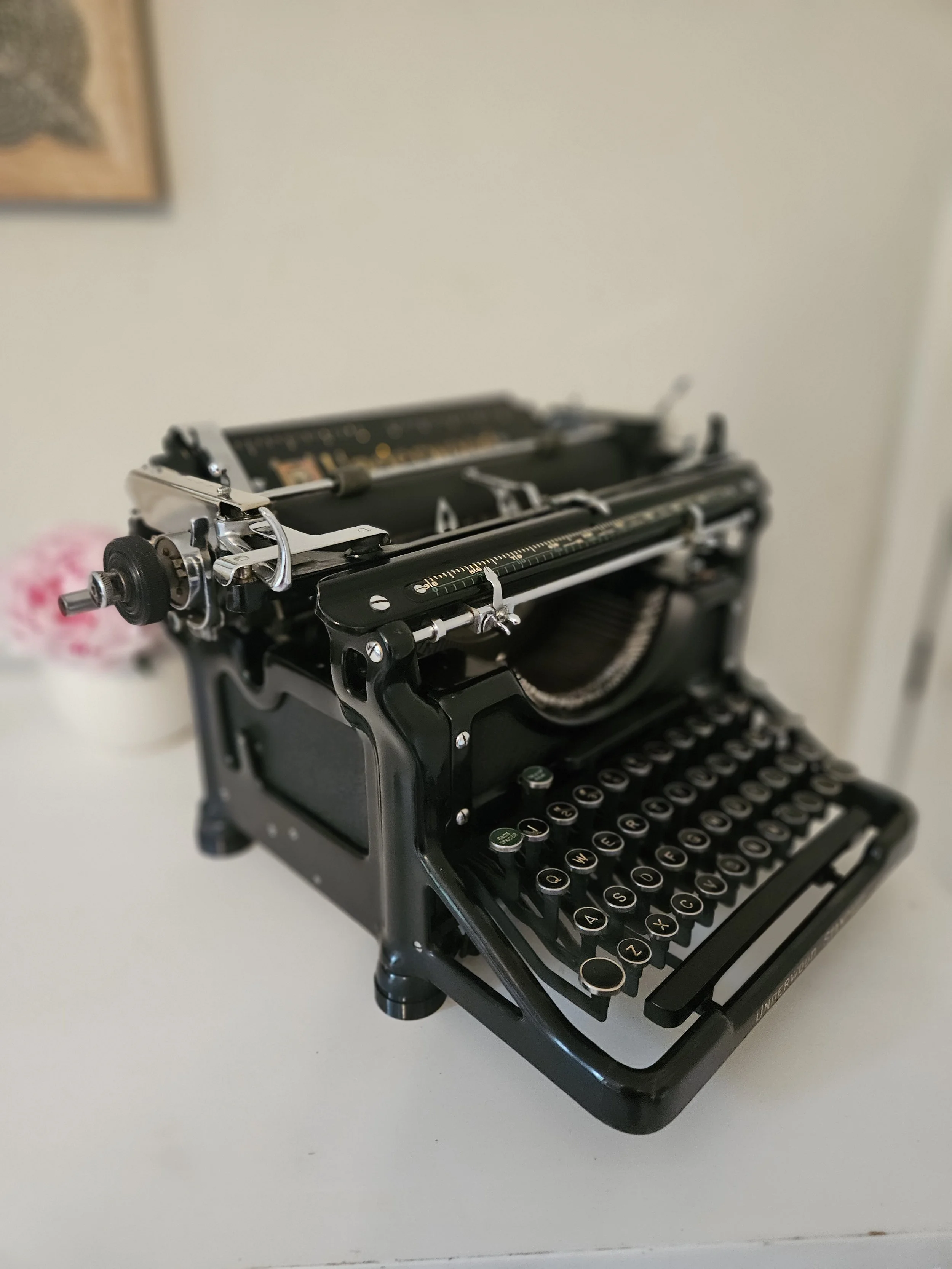
A rare Underwood No. 6. (We sell the 5 here)
Where to Start
You don't need to be convinced. You need to be matched to the right machine.
The honest truth is that the wrong typewriter — a rough one, an unserviced one, a 1980s plastic one dressed up as vintage — will do the opposite of everything on this list. It will frustrate you and it will sit unused.
A properly restored golden-age machine, matched to how you actually write, does all of it.
→ Read the Vintage Typewriter Buying Guide: https://www.classictypewriter.com/vintage-typewriter-buying-guide
→ See what's restored and available now: https://www.classictypewriter.com/typewriter-shop
Write on,
Steven Budden Jr.
The Classic Typewriter Company Chapel Hill, NC
PS. All of this will soon be summarized in my Screenless Writer book.