
The legendary Corona Three Folding Typewriter
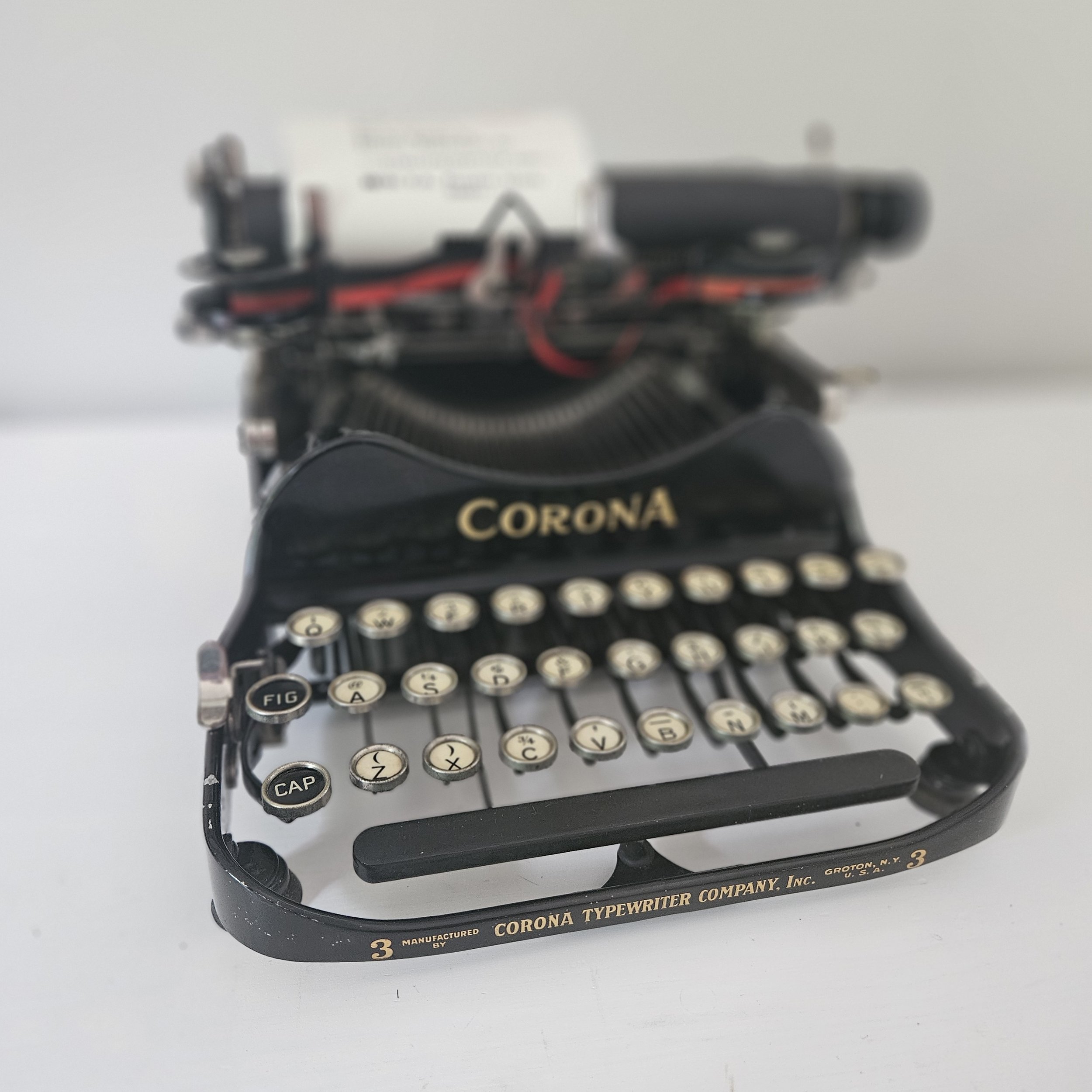
This stunning Corona 3 hails from 1914.
The Corona Three was a portable typewriter manufactured by the Corona Typewriter Company, later part of the Smith-Corona Typewriter Company.
Is many of the early typewriters were huge beasts, small, portable typewriters were being attempted by a few companies. Fox created a folding typewriter (which Corona later sued out of business), as well as Hammond. Parts of the Blickensderfer folded.
Though the folding mechanism is eccentric and seems odd now, the Corona Three holds up surprisingly well to time. It was introduced around 1912 and remained in production until 1941, making it an extremely popular typewriter model for nearly three decades.
Somehow, it was the first and last great folder.
While ultraportable machines of the 50’s, the Groma Kolibri, the Olympia SF, the Princess, and the Hermes Baby / Rocket can be great, a lot of people like to get the page higher up off of the keyboard for easy view. The Corona Three does this quite well’ perhaps better than its European counterparts.
Lawrence Durrell uses a Corona Three in The Durrells in Corfu after he smashes his Corona Four. I was surprised by this ‘reversal’ of machines, going back to the prior model, until I noticed how long the Corona Three run actually was. The ‘later’ Corona Four was manufactured from 1924 to the early 1950s. So there are a few decades there were the 3 and 4 were produced, meaning it was not an easy usurpation.
Both come in some fascinating colors, like the famous Corona Four in Lavender and Rose Gold (of which I’ve had two, and still have one now), Mountain Ash Scarlett, and a few others. The Corona Three Special came in Black and Gold, gloss black, blue, and bright red.
The Corona Three is tiny, light, beautiful, and a conversation piece. The folding mechanism is quite robust, in my experience.
Write on,
Steven Budden Jr.
Classic Typewriter Co. | Chapel Hill, NC
A few pictures to follow:
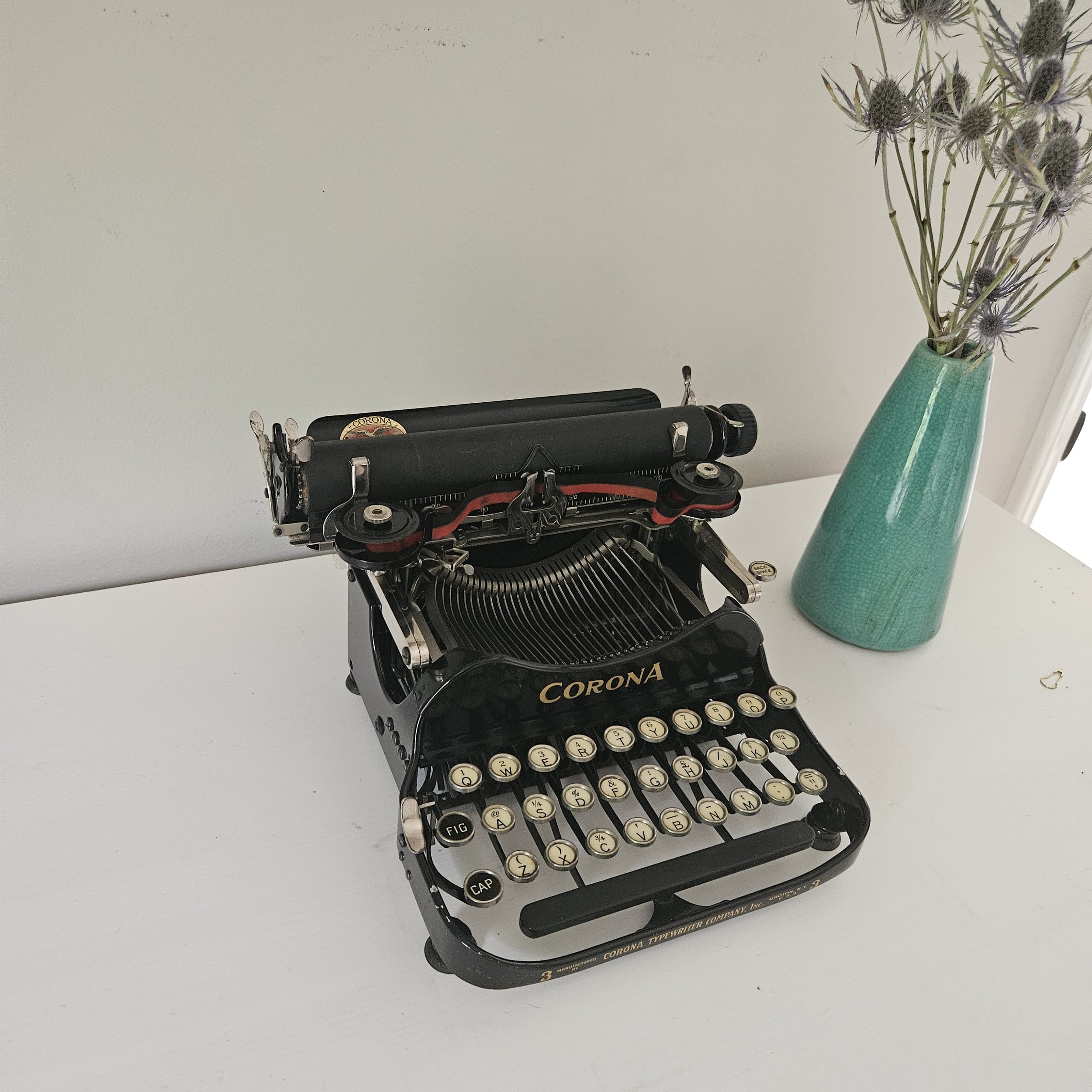
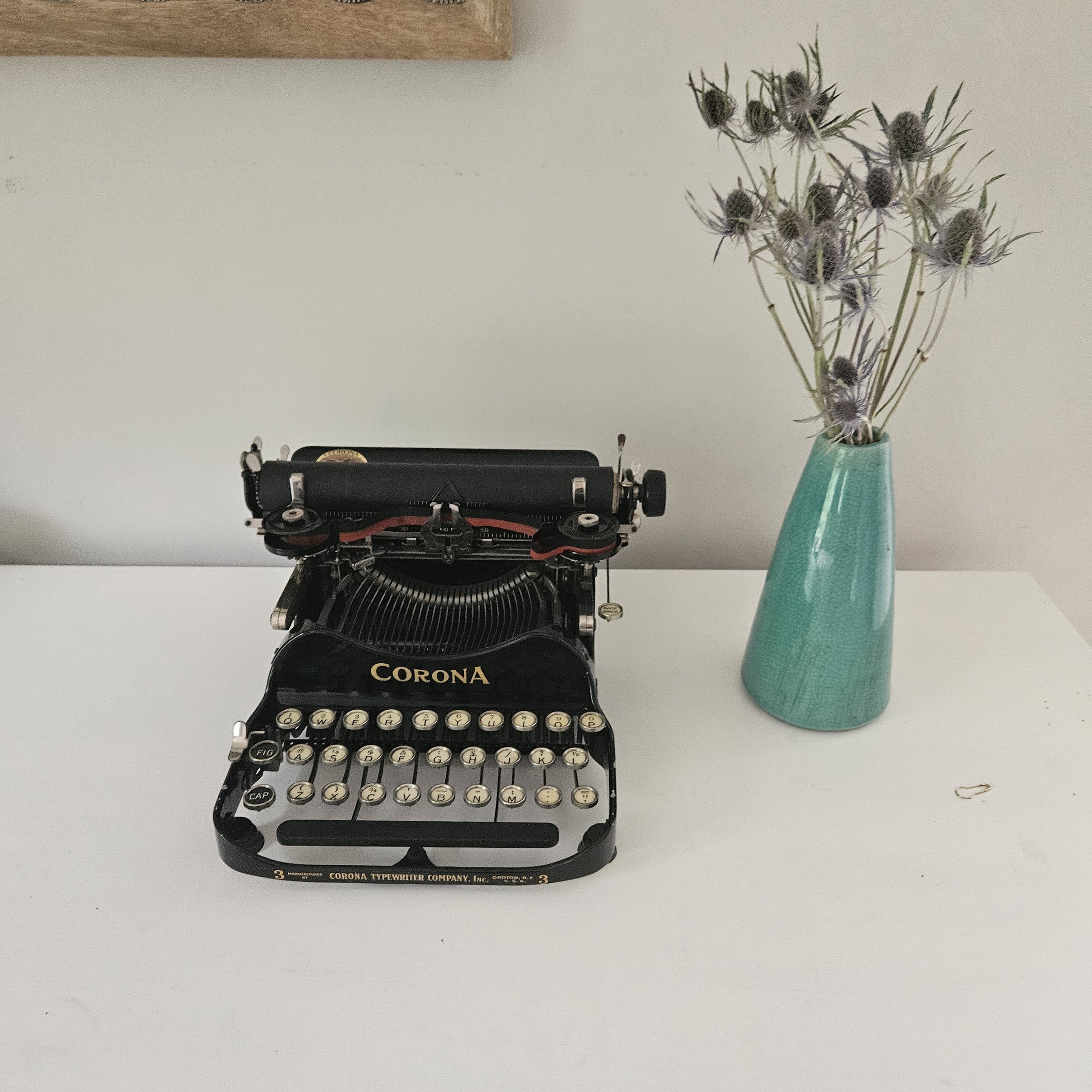
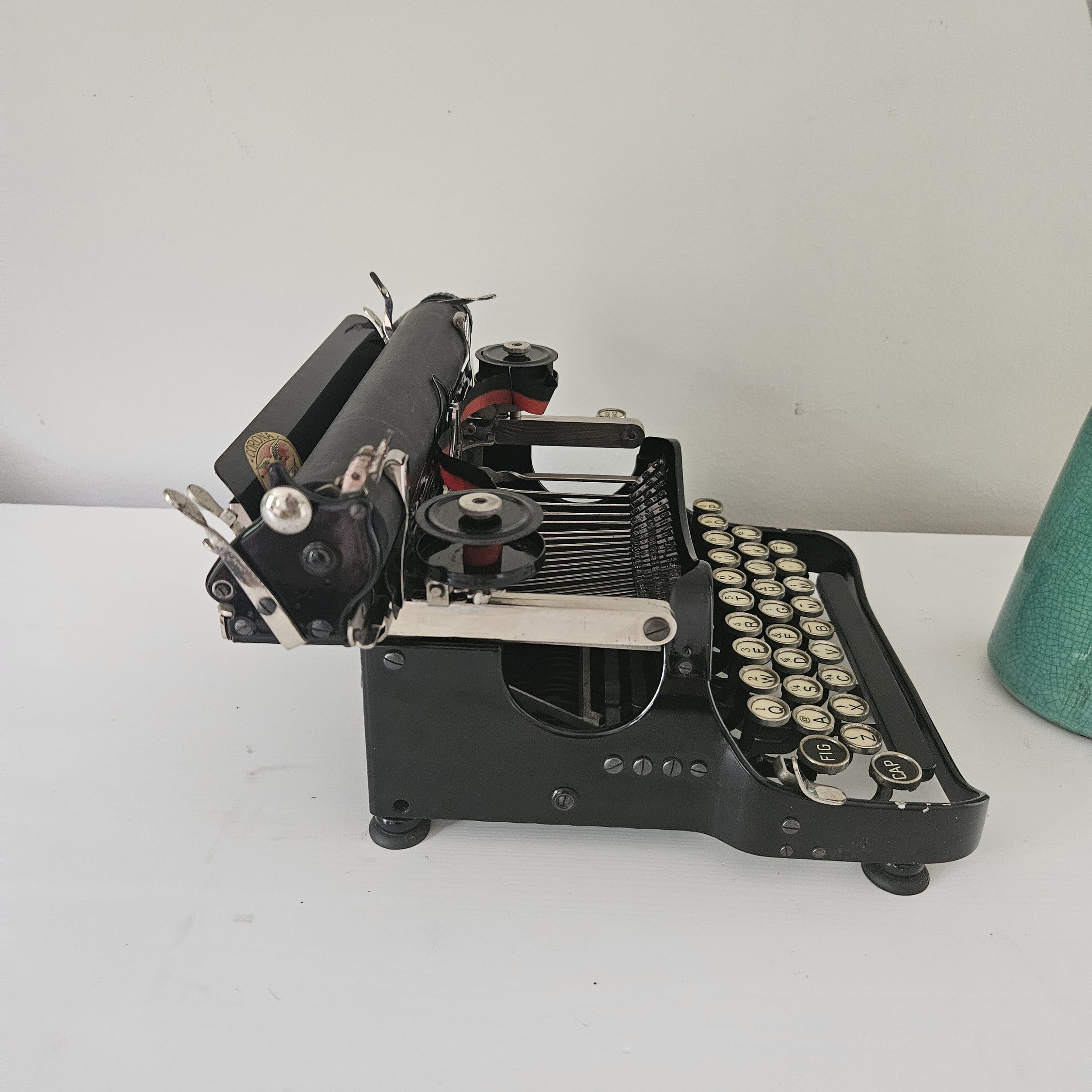
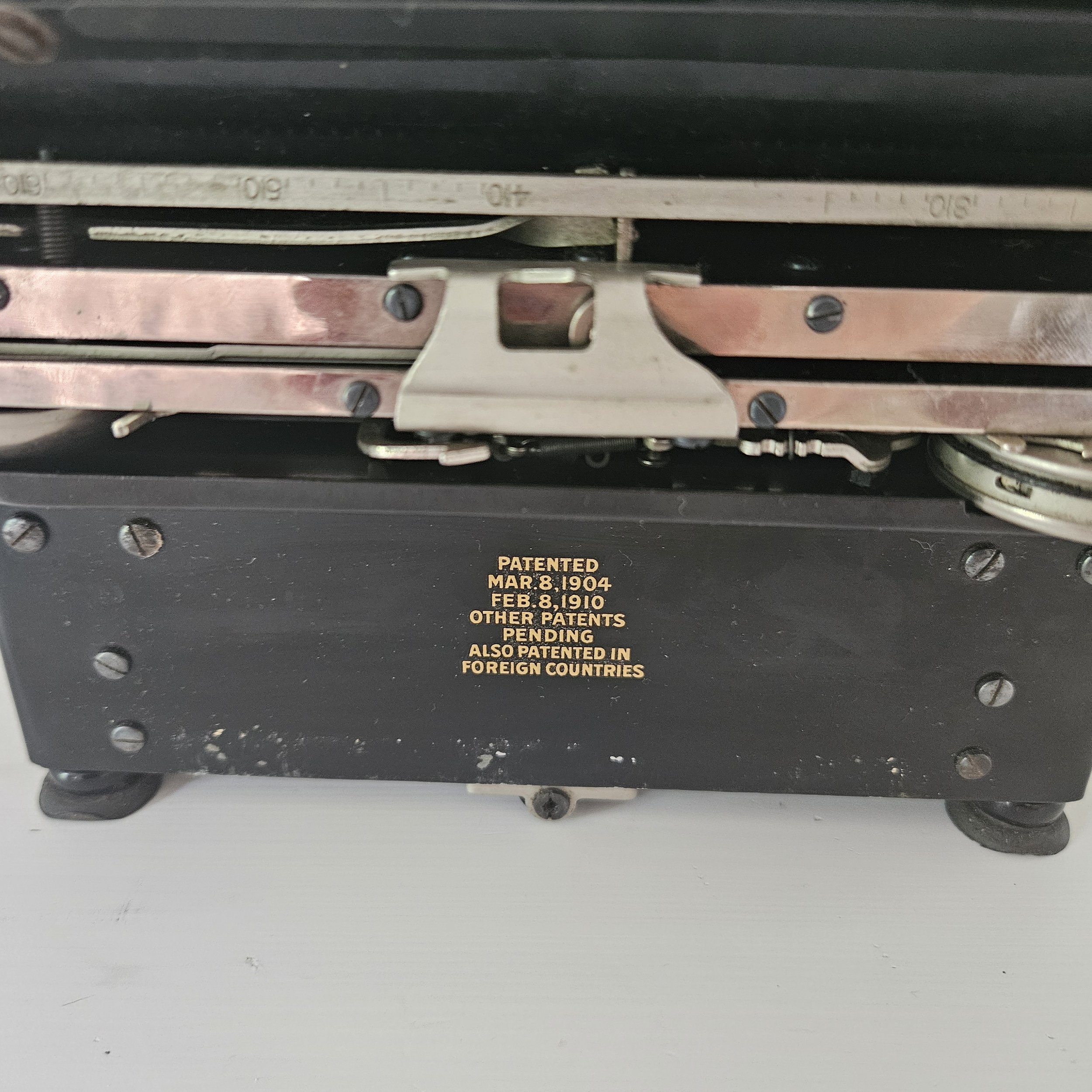
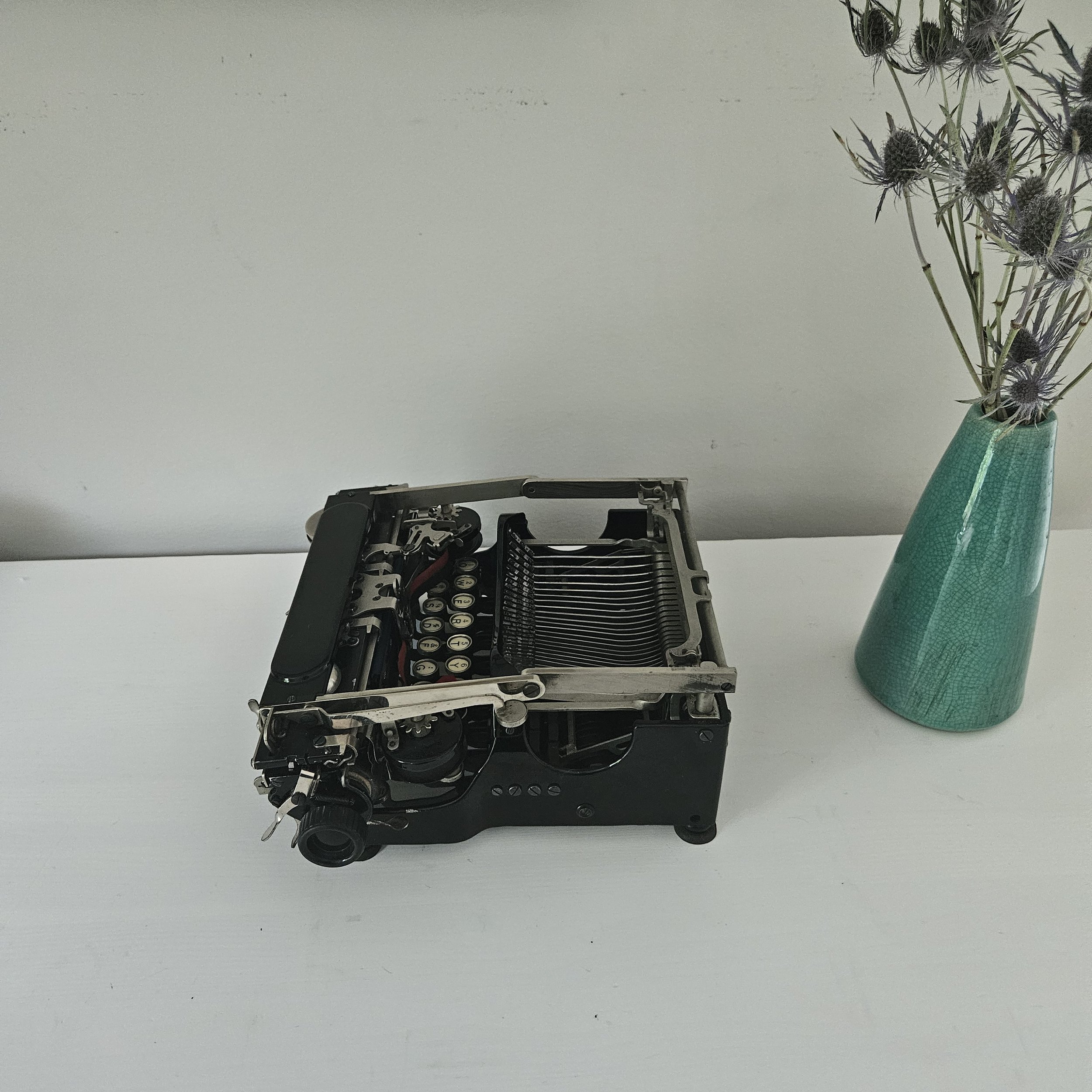
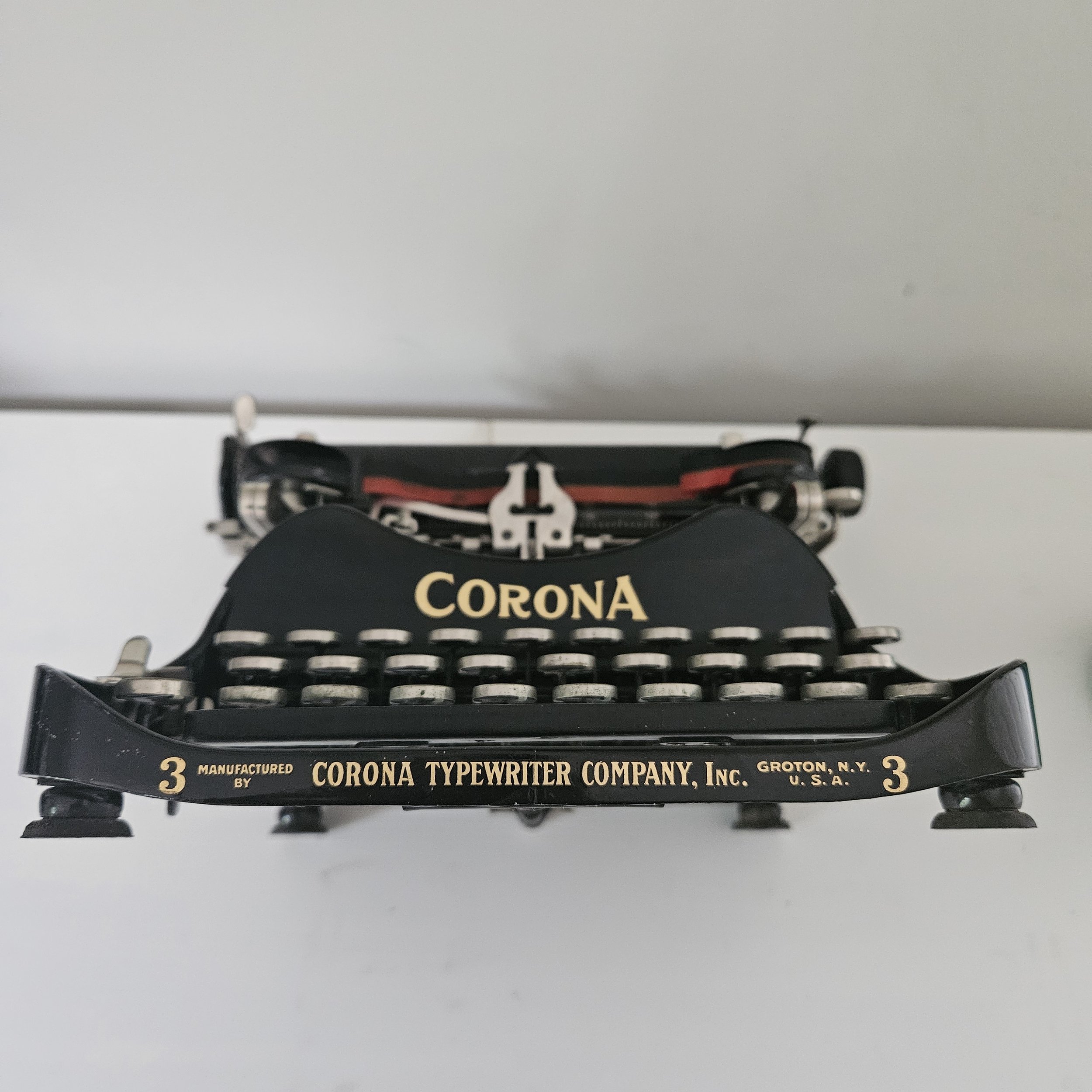
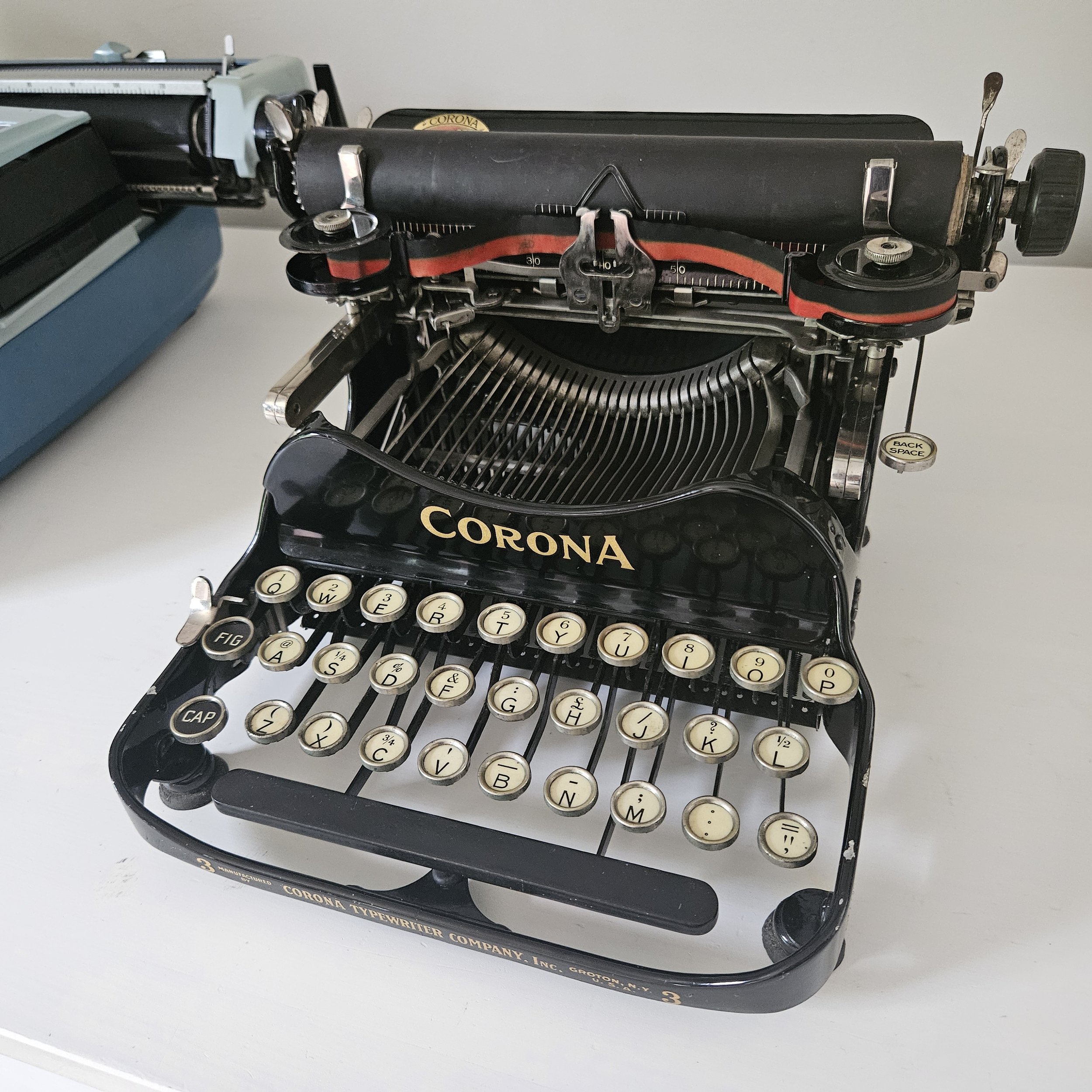
Welcome to one of history’s finest typewriters, lovingly restored for your writing pleasure.
Order now. In about 3 weeks, you’ll get a stunning, authentic, lovingly-restored specimen of this model in the condition selected.
History.
The Corona 3 was introduced by the Standard Typewriter Company in 1912 and quickly became one of the most successful portable typewriters ever made, remaining in production until 1941—a nearly 30-year run that speaks to the brilliance of its original design.
The machine's compact size and lightweight construction made it ideal for writers on the move. It was so practical that the British Army adopted it during WWI, and it became a favorite among journalists, authors, and war correspondents who needed a reliable tool in the field.
With the Hammond Folding and the Blickensderfer, this was an early attempt at a VERY portable typewriter; in fact, to increase portability, it folds in half and fits into the case; making it a precursor to modern laptops.
Ernest Hemingway acquired his Corona No. 3 in 1921, composing the Nick Adams stories on it. He famously declared it "The only psychiatrist I will ever submit to!" Other notable users included Agatha Christie and Sinclair Lewis.
The Corona 3's success prompted the Standard Typewriter Company to rename itself the Corona Typewriting Company in 1914. In 1926, the company merged with L. C. Smith & Brothers to become Smith-Corona.
Finishes
Early models came in black enamel with nickel trim. Later models used DuPont Duco lacquer finishes, available in colors including rose gold, red, green, and blue—marketed as Corona Specials.
The Corona Three is a Three Bank (three rows of keys).
“Typewriters with only three rows of keys, or "three-bank" typewriters, will often have two shifts (often marked SHIFT and FIG. or FIGURES) to compensate for the reduced number of keys on the keyboard. This allows them to produce lowercase, capital, and symbols using the same key depending on which shift is being pressed.”
Corona 3 Typewriter Features:
Metal Body in Original Gloss Black
Gold decals
Nickel Plate Detailing
White Keys with Plated Escutcheons
Pica 10cpi Typeface (generally)
Margin Function
Manual ribbon reversal
Single and Double Line Spacing
2-tone ribbon option (red and black)
The case is remarkably small (compared to other portables).
Dimensions:
Width: 29 cm = 11.4 inches
Depth: 25 cm = 9.8 inches
Height: 12 cm = 4.7 inches
Weight Weight: 9-3/4 pounds with case; 6-3/4 pounds without case. (A feather!)
We can see why this model was used by Lawrence Durrell, Agatha Christie, Hemingway, and others.
The shape is interesting: the machine feels upright after unfolding, and the paper is up closer to the field of view. I frankly don’t know why more typewriters didn’t go in this direction, and assume some sort of corporate conspiracy. The design was TOO good?
***
We restore beautiful machines and put them in the hands of writers, poets, and dreamers.
When the inspiration strikes, be ready!™
If you have questions please don’t hesitate to ask! I want you writing, Screenless!
Most sincerely,
Steven Budden Jr.
Classic Typewriter Co.
Chapel Hill, North Carolina
RESOURCES
WHAT SETS US APART
Our Promise | Warranty | Working Guarantee | Lifetime Tradein Policy